When a game of Magic turns into a “story”, it is no accident: it is because the system spoke, the player listened and turned what it said into meaning. Noticing that is cool and interesting, but doing it is something else, more complex than it first appears.
Here we go. Throughout this issue I will try to put together a basic but complete guide to building good narratives in card games, especially TCGs and CCGs (trading card games and collectible card games). I hope you enjoy it.
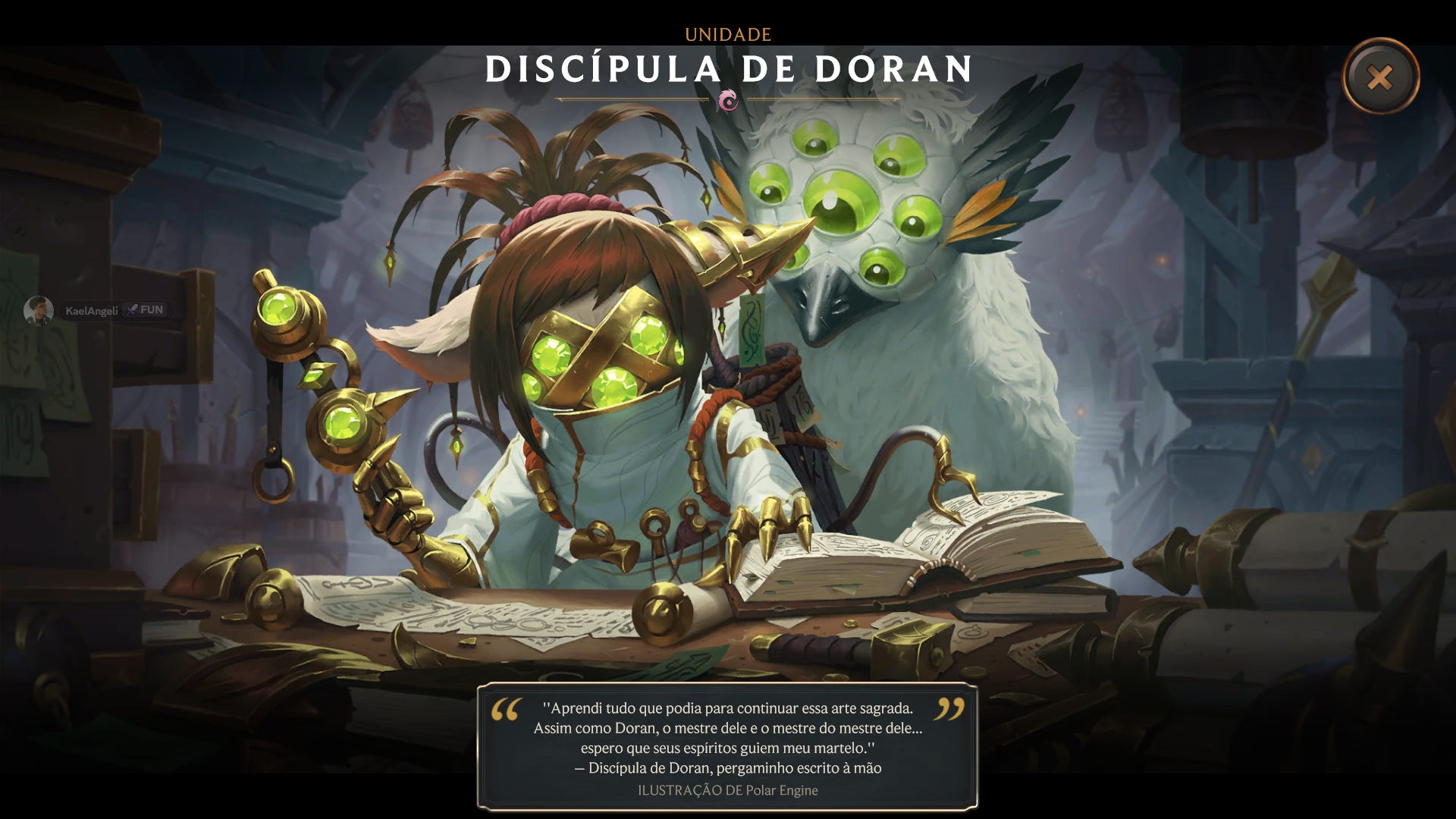
In card games, narrative is born from the perceived behavior of the system — the tensions, the resource trades, the timing of responses — and not only from what is written on the back of a card or below its art. Art and lore are valuable fuel, but on their own they do not drive the narrative engine; they amplify what the mechanics have already started to say. Understanding this is the central principle behind everything we will discuss next from a narrative design perspective.
Below I will invoke this central principle and the technical work that follows from it: how to think of cards as “beats” in a story, how to build identity through the deck, how to scale information to create emotional peaks, and what to measure in playtests to know if your narrative is really working.
Foundational (non-obvious) principles
In this topic and in much of the text I will use two big games as references, Magic: The Gathering and Legends of Runeterra, and now and then I will mention others like Pokémon, Yu-Gi-Oh!, Gwent and more.
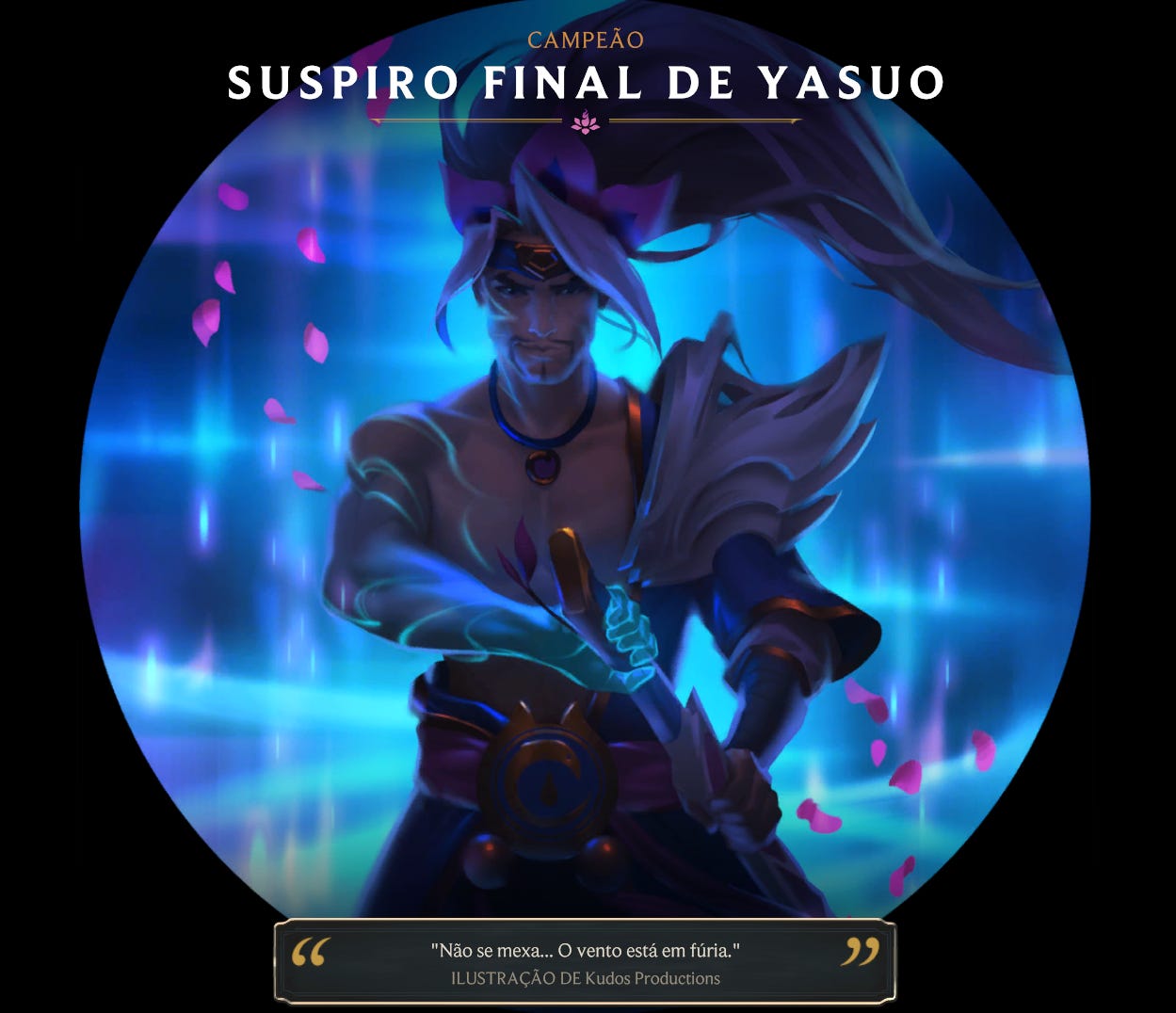
As I said, narrative in card games is born first of all from the system’s behavior, the flow of actions and how the player reads that flow. In Legends of Runeterra (a digital card game based on the League of Legends universe), for example, the rhythm between giving up the attack initiative, responding with a fast card or playing a slow spell creates tension. It is not the card text that creates the heat of the moment; it is the timing between attack, response and champion level-up, all mechanics delivered to the player in a flow and rhythm that is easy to read and understand.
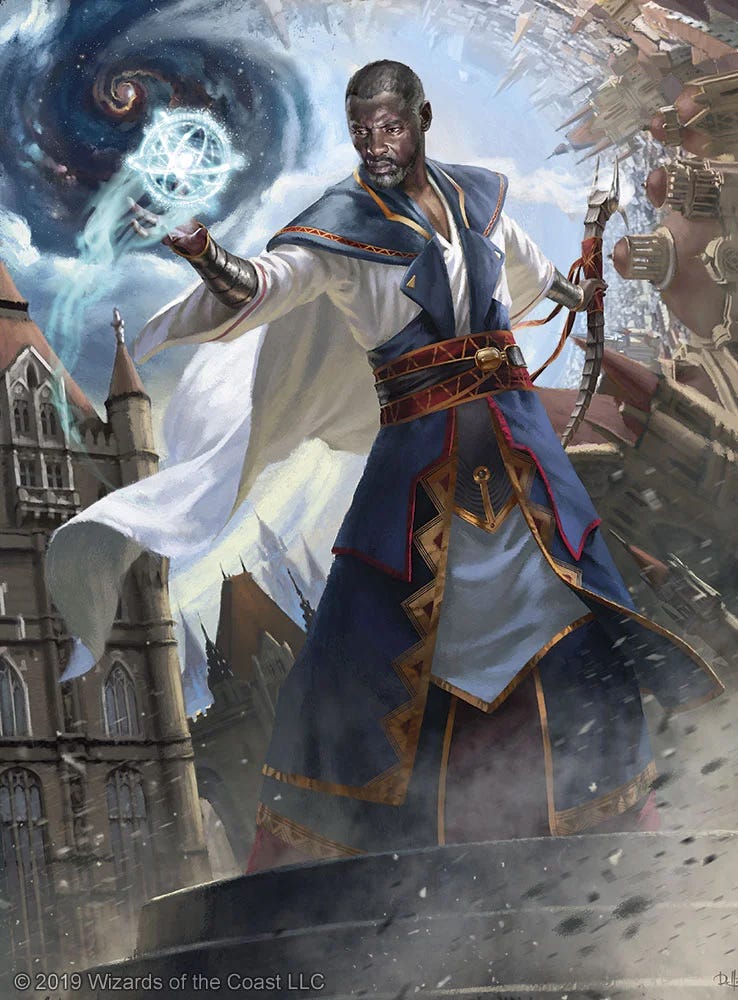
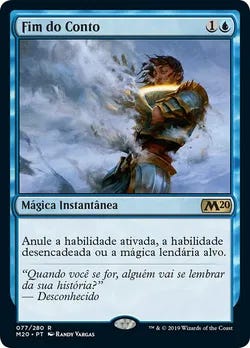
In Magic: The Gathering, the equivalent is in the interaction with the stack and in instant responses: an instant played at the right moment changes the whole meaning of a play, and that duel of priorities is the game’s narrative voice, something you can also see in more recent Yu-Gi-Oh! duels.
That is why every mechanic must carry a clear semantic justification, what we call mechanic ↔ theme fit. In Magic, when a card seems to evoke an archetype (say, a selfless protector), its mechanics need to tell the same story. If the effect is simply “deal damage to your controller” with no thematic cost or compensation explaining that sacrifice, the player feels dissonance, and dissonance, as it is always good to remember, breaks immersion, and immersion is one of the fundamental pillars of any game.
The same goes for Runeterra: a card that presents itself as a “defender” but whose gameplay forces sacrifices that do not match the image breaks the cohesion between art, text and play. Semantic coherence is what makes aesthetics and mechanics speak the same language — without it, immersion falls apart. Always remember this: as game developers, we never want the player to lose immersion. Ever.
It also helps to think in levels of narrative granularity:
At the micro level is the single card: in Magic, a well-named instant with a clear payoff; in Runeterra, a fast spell that resolves a line of attack.
At the meso level is the composition of hand and board: an aggro deck in Magic or a board built around a champion in Runeterra tells “who” the player is in that game, which strategy and personality they take on, and their play style.
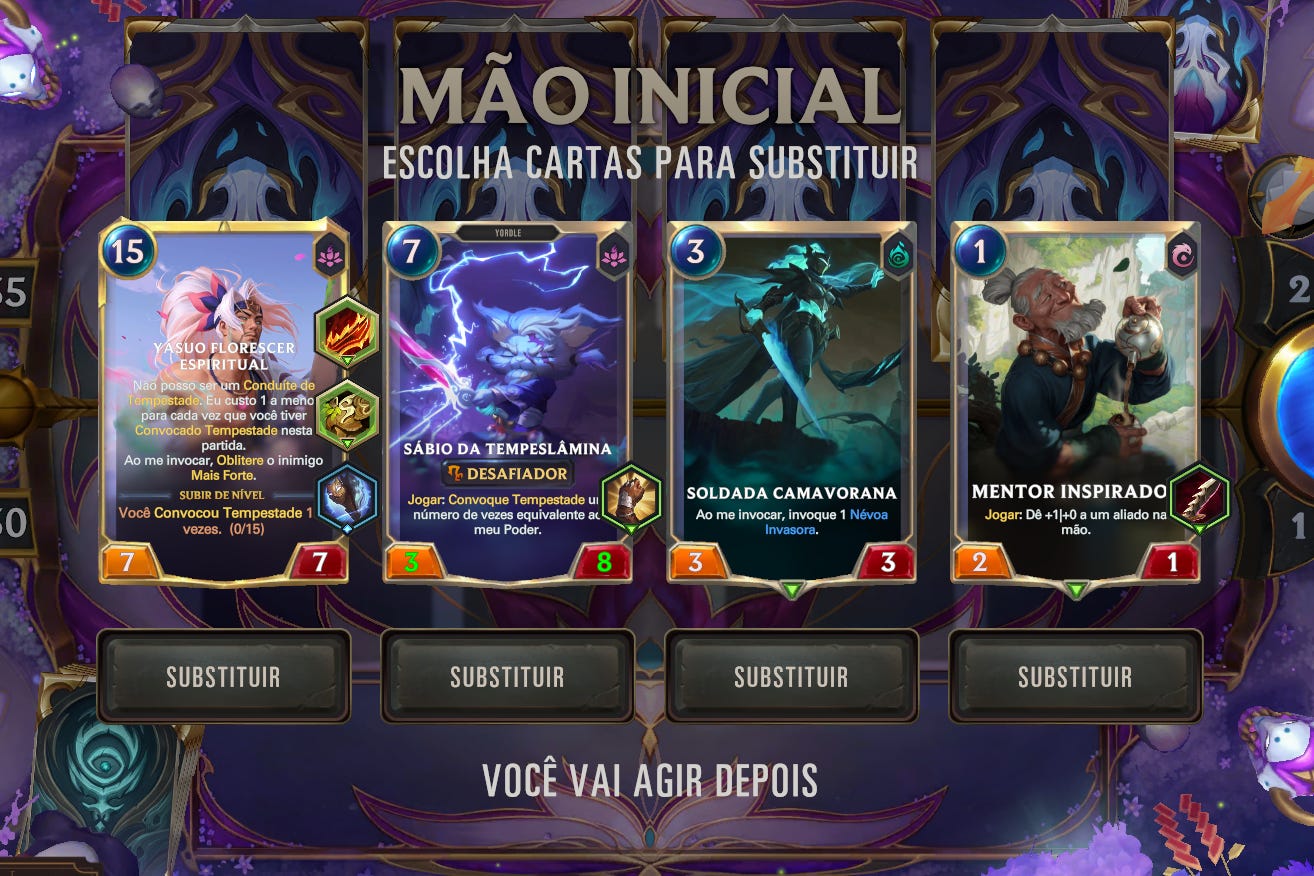
At the macro level is the arc of the set or cycle: Magic sets designed as chapters, and the series of expansions and region development in Runeterra, should offer repeated thematic beats that together form a larger arc. In short, think of a game’s current “season” as the macro: the theme that fits the main decks of the moment and their mechanics too.
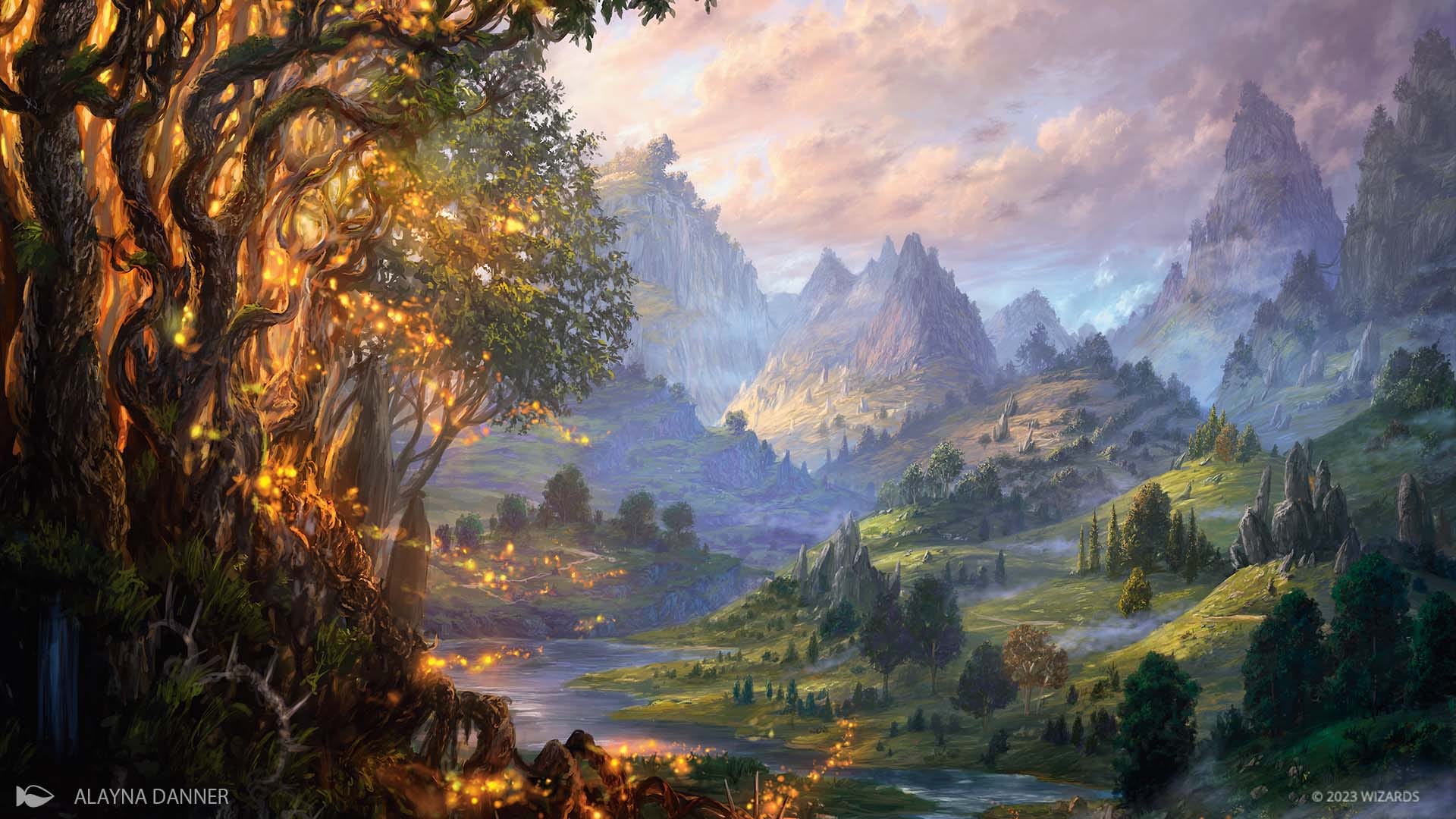
Finally, never lose sight of the attention economy. Decisions in card games are fast; the narrative has to deliver information and emotion in the time the player has to process them. Think in very short reading windows (hundreds of milliseconds per decision). In Magic: The Gathering, overly dense card text, a confusing rule or a stack with too much complexity makes reading the game heavy; in Runeterra, long animations or excessive barks (what a card says when summoned, for example) can increase cognitive latency. Long text, redundant flavor text (narrative text on a card) or visual effects that do not guide the play raise the cognitive cost and erase the story instead of telling it.
Applied techniques
Think of each card as a beat in a song:
There are setup cards, which introduce theme and resources;
Escalation cards, which raise tension and force interaction;
Payoff cards, which resolve arcs or deliver consequences.
Before designing effects or writing flavor text, label each card’s function in your set: setup, escalation or payoff. This discipline avoids loose cards that pile up noise instead of meaning. It is also one of the first steps in building a deck as a player, if you know the cards well.
Deckbuilding, in turn, is identity building:
A deck is more than a sum of stats; it is a persona. Players should recognize a voice and an intent when building and playing the deck. A practical technique is to dedicate 4–6 “glue” cards that always reinforce the archetype’s narrative (recurring synergies, barks that personify decisions, and one or two finishers (that super powerful card that can decide the game) that feel inevitable).
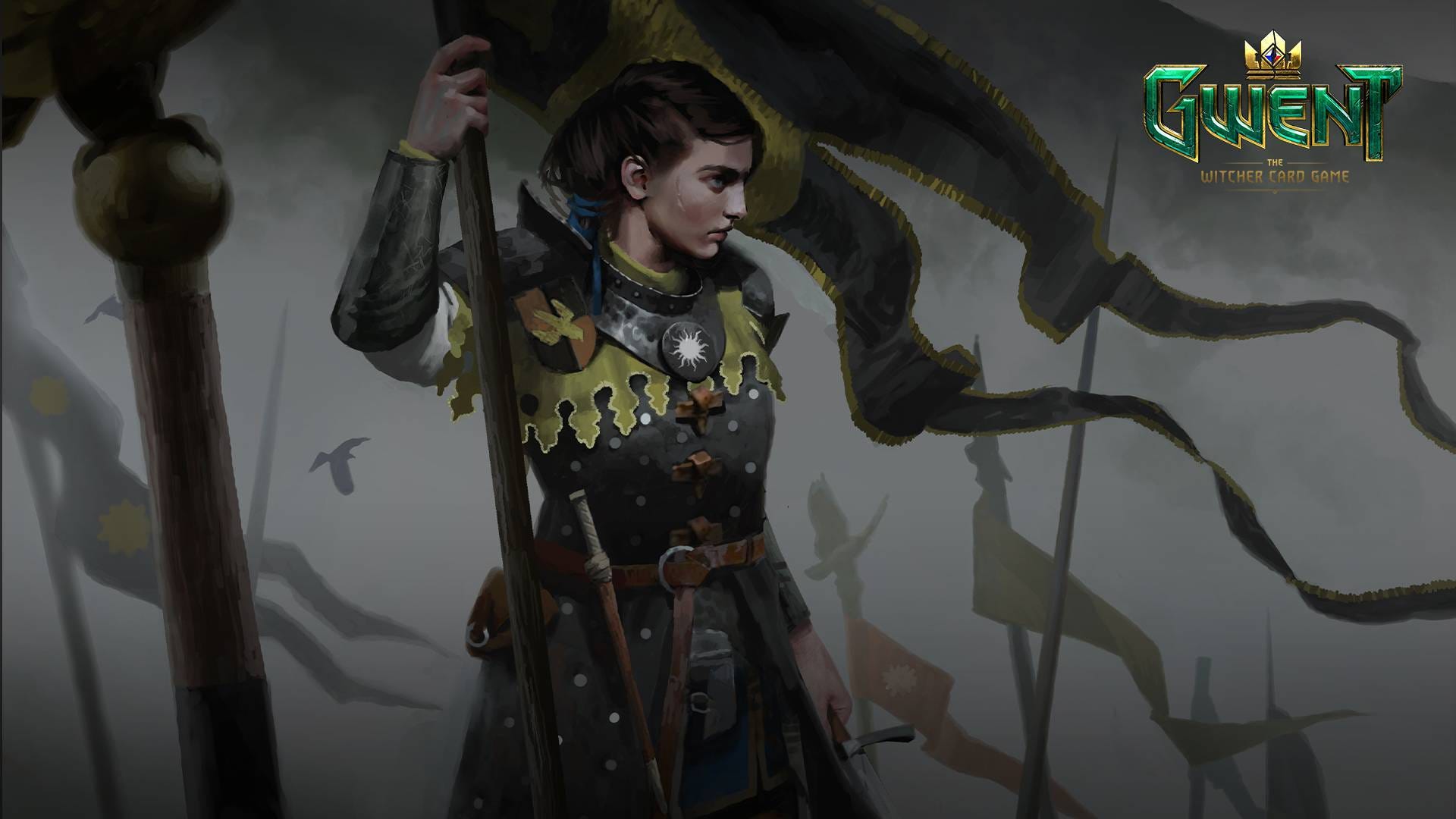
Gwent (a card game based on The Witcher universe), for example, uses faction combinations so the board tells stories of mobilized armies, and you can see this in Dfiance (the game I work on) too.
Transformations and tokens are excellent tools for systemic narrative:
A card that evolves during the game, or a token with a name and persistence, creates a sense of legacy. By naming tokens or transformed cards, you give the player memory points they can tell friends about later: “remember my ‘Alder Shard’ token that survived until the end?”. That is narrative emerging from the game after it ends. Invest in it.
Reveal sequencing (moment design) is a technique that deserves care:
Do not deliver everything at once. Plan a “mystery card” in the first third of the set, an escalation mechanic in the second third and a “climax card” at the close. Legends of Runeterra uses champion evolution and levels to scale drama in every game, and following that pacing principle is worthwhile. It lets us create tension, immersion, shifts in pacing and even more dynamism than games that do not work this way.
In digital games, diegesis in the interface — barks, stingers, small animations when cards are played — increases the sense of narrative agency. But use it sparingly: limit barks to around 6–8 per character per game to avoid fatigue and noise. I came up with that number based on Legends of Runeterra, because when you play you notice when it gets annoying or tiring.
Exercise: from theme to an 8–12 card set
This is a lean procedure to test the narrative. Follow a mini-project:
Define a theme sentence (for example, “bioluminescent invasion”) and the three beats that support it.
Then design 3 setup cards that introduce the resource or environment, 4 escalation cards that drive the tension home and 2 payoff cards that deliver the resolution.
Write 8–20-word flavor text that guides the reading without telling everything; save two cards for cinematic art and one short animation (in digital) for the moments people will share on social media (never too much hehe).
Mapping mechanic → emotion helps anchor the flavor text:
Gradual damage suggests poison or persistent pressure;
Discard conveys vulnerability;
Reveal and mulligan (swapping cards or your hand before the game starts) sell suspense;
Control and removal communicate powerlessness or dominance;
Use this matrix as a compass when writing the flavor line: if a card forces a discard, the flavor should evoke loss and risk, not bravado.
Cases and contrasts — learning from examples
Some games are useful paradigms because they show concrete narrative design decisions. I played a bit of each one mentioned, and the ones I could not play I studied through videos and explanations on YouTube.
Magic: The Gathering shows how colors and mechanics can be consistent in identity; expansions work as macro chapters. There are, however, examples of experimental mechanics that had to be re-themed because they caused confusion.
Lesson: always validate the theme fit (how well cards fit the theme).
Android: Netrunner is instructive about how timing and simultaneous actions create a narrative dialogue between players. This game in particular is an LCG (living card game), where the starting decks are fixed, which makes it less random than TCGs and CCGs, where we build our own decks.
Arkham Horror: The Card Game is an almost canonical example of episodic narrative: the whole campaign works like a playable novel with progression, consequences and memory. It is another LCG, set in the universe of the Call of Cthulhu RPG.
Gwent structures factions as military “tales”, using provisions and rows to control the emotional curve. It stands out from the others because it is strategic about where cards sit on the board, just like Dfiance; the point here is telling a military story about armies moving against each other. One of the game’s strengths is its universe: The Witcher is rich in every fantastic element you can think of.
Flesh & Blood and KeyForge teach about identity: the first by focusing on the hero and their combat angle; the second by exploring the uniqueness of each deck as a source of emergent stories. I admit these two are the ones I studied and played the least. I did not like Flesh & Blood much, and I lack friends to play KeyForge with, which was one of the most interesting on this list.
Slay the Spire and card roguelikes show narrative through the journey: variable runs that, added up, tell the story of the player’s attempts. Card roguelikes are a fairly recent idea, but they show how a game’s genre is never tied to a single way of playing. I really admire anyone who can structure this kind of experience; I admit my skills are still somewhat far from that.
Narrative playtesting: basic metrics and a quick script
Testing narrative requires both qualitative reports and objective data. Ask playtesters: “What did you feel at that moment?”; ask them to point out up to three narrative moments during the game. Reports like these reveal whether the narrative intent came across. On the quantitative side, track trigger rates (how often a narratively key card was activated) and retention on set (player retention). If players come back to try the arc, you have gained something real.
An efficient playtest script: play blind rounds (no lore), then rounds with lore and barks turned on; compare decisions, times and emotional reports. If a payoff rarely triggers in tests, you may need to step back and raise its occurrence rate or create alternative paths that trigger it. The payoff (resolution, climax, delivering on the promise made to the player) is the goal of each game; the rounds are the road there, and of course, may the best player win.
To wrap up, a few tips:
When reviewing a card, check — directly and briefly — whether it meets these requirements:
What is its mechanical role (setup/escalation/payoff)?;
Is there a one-line narrative justification?;
Is the flavor text 8–20 words long, and does it complement the mechanic?;
Do the art’s composition and palette match?;
Does the name evoke an action or a state?;
Does the card pass the reading test when shown without art?
This list makes the editorial process faster and less prone to bias.
Audiovisual effects and microcopy, details that tell
In digital games, barks should be short lines that point to intent and mechanics. Prefer “I’ll cut your link.” to a generic “Take that!”.
Sound stingers should be short (under a second, from what I noticed), saving variations for payoffs;
Repetitive sounds are tiring and hide telemetry data.
In the UI, concise microcopy (for example “BLOOD: +1”) reduces cognitive load and keeps the game easy to read. Always prefer clear micro-information to long sentences.
4 common mistakes to avoid (and why)
Forcing lore where the mechanic is weak creates dissonance and breaks immersion; always balance these aspects;
Too much flavor text on combo cards raises cognitive cost and breaks immersion; always do a technical review focused on the player’s cognitive cost;
Animations and sounds that mask telemetry put noise where there should be signal; always review these aspects technically, before and after playtests, so you do not confuse the player;
Building an entire expansion around an extremely rare payoff dooms the narrative to the margins. The best story is the one players experience often enough to remember, not a myth that happens once in a million games.
I think that is it. This was a more technical, content-rich issue for those who dream of working in game writing or already do. I hope I helped, taught something, or at least delivered quality content to you, reader.
I am seriously thinking about starting a YouTube channel to go deeper into some of the topics I bring to these newsletters. If you like the idea, comment below so I know.
Soon I will bring more news about the card game Dfiance, where I work, and a new card game I am starting on soon.
See you, explorers!
Originally published in Prosa & Pixel, on Substack. See it on Substack · Subscribe to Prosa & Pixel · All issues