Warning: the text below contains spoilers for the book reviewed :D
We come to fantasy by many roads. Sometimes it is escapism. Sometimes, anger. Other times, a kind of longing we cannot even name. But if there is one thing that draws me to contemporary fantasy, it is when it leaves tamed dragons behind and moves toward awe — that feeling that the world holds something too old, too dangerous, that only fools would touch. That is the mood that caught me in Relicário Bruxo e os Artefatos do Poder (The Witch’s Reliquary and the Artifacts of Power), a collection published by Perene Editorial and edited by Filipo Brazilliano, bringing together three stories that share what good fantasy always offers: a magical object, yes, but above all, a moral choice.
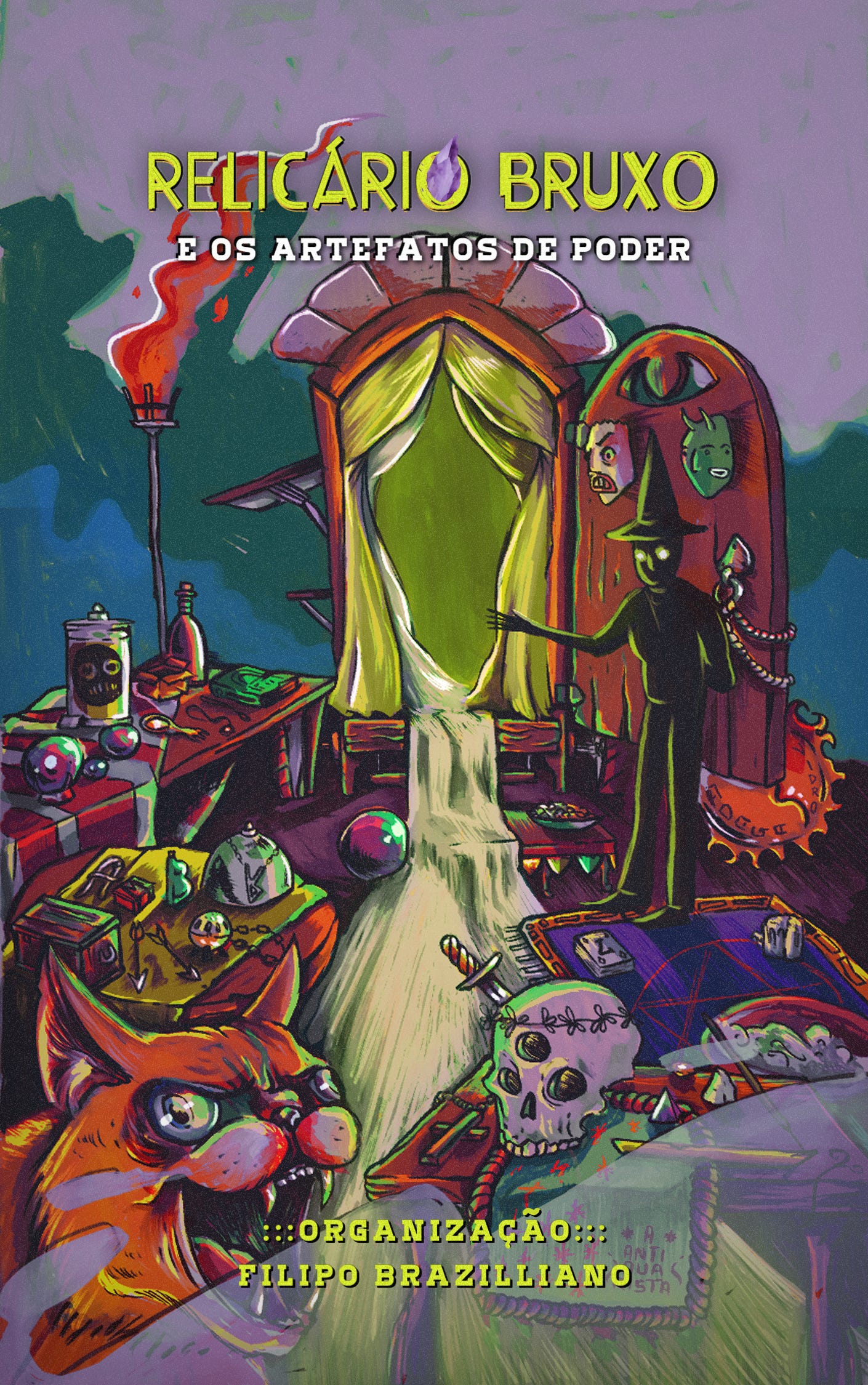
The cover, once again, won me over immediately. I do not know if it was the orange cat (spoiler: it bites), the typography evoking a certain archaic mystery, or the title that points to a place of forgotten memories: “relicário”, reliquary, a heavy and beautiful word, the kind that sounds like a poem on its own. The subtitle already tells you what is coming: artifacts of power. And power, as we well know, never comes for free.
The Foreword
The foreword by Auryo Jota is delightful in tone, in imagery, in construction. It is less an introduction and more an immersion in the book’s own world. He writes as if he were already inside the relic shop, offering a guided tour among items and stories, warning that some objects bite, others kill, and a few do both. That opening sets the ideal stage for the stories that follow: all of them built around rare, dangerous, often misunderstood and always transformative artifacts.
Here Auryo gets right something many fantasy anthology introductions get wrong: he does not explain the stories, he summons them. With a text that recreates the atmosphere of a relic shop — half antique store, half trap — the author invites us to dive into each story like someone lighting an oil lamp and walking down creaking steps in search of something too old to be named. The reading has the rhythm of a conversation among dusty shelves, full of false leads, promises and warnings. The tone is playful, but the substance is serious: magical artifacts carry memory, and each story in the anthology will therefore be an encounter with what we choose to forget or preserve.
The text also works as an opening spell: by presenting the stories in a narrative way, almost like an enchanted master of ceremonies, he creates an immediate bond with the reader. He knows the real power of artifacts lies in the stories that come with them, which is why he builds the foreword as if it were a story too. The shop, the warnings, the cat that bites (and seems to step out of the cover to follow us with its eyes), all of it places the reader in a liminal space between reality and invention. By the end, we are no longer just about to read three stories: we are inside the reliquary. And like every good reliquary, this one hides scars too.
Story #1: The Glass Dagger
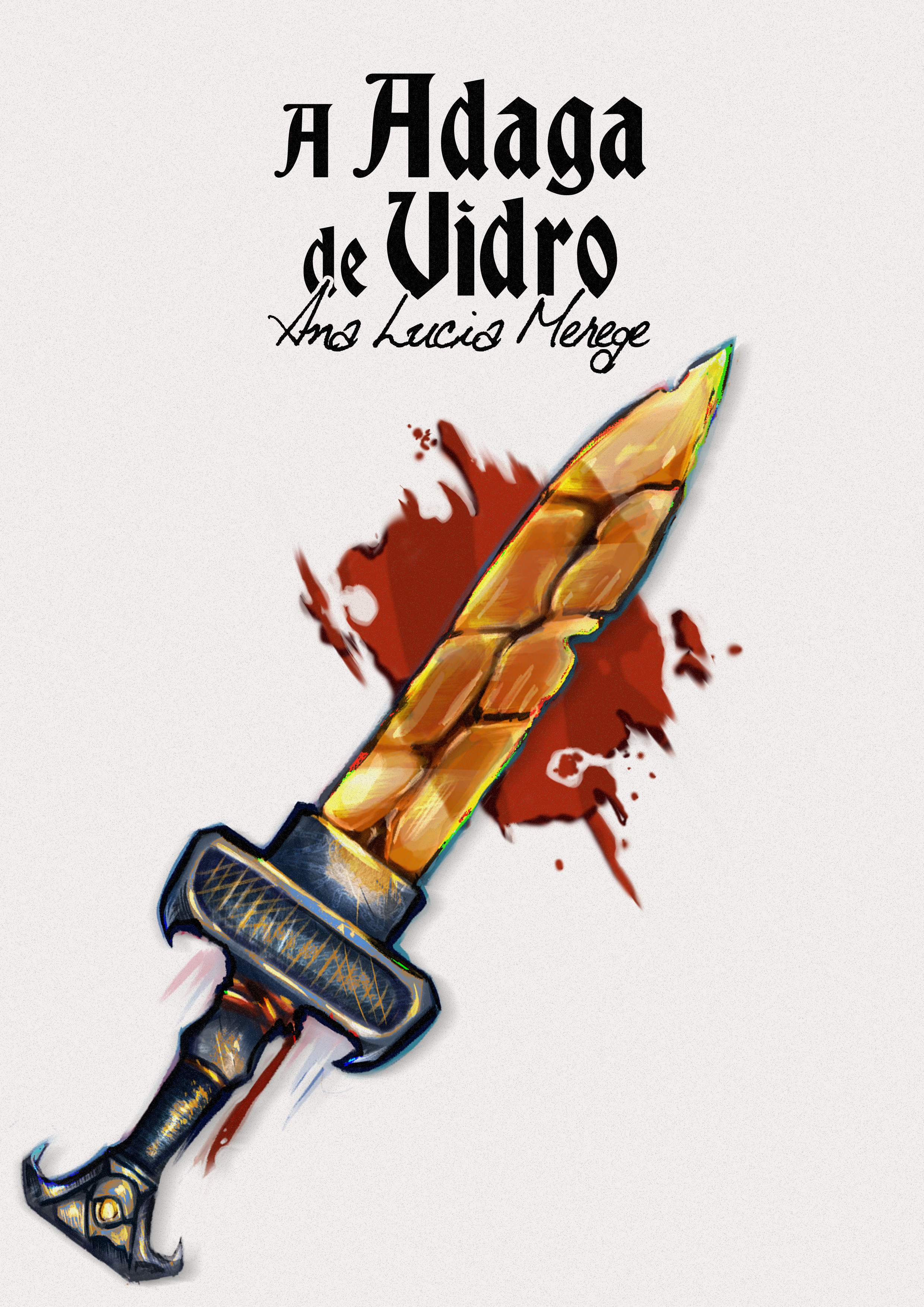
If one word defines this story, it is elegance. Ana Lúcia Merege writes with the care of someone who deeply understands the symbolic value of language. The setting is rich in references to the ancient world — Carthage, Garama, the desert, caravans — and yet it breathes naturally. No word is wasted. The dagger, a magical artifact that seeks the enemy’s heart from a distance, is a fascinating concept in itself. But what caught me was how the narrative treats power and revenge: the protagonist, Tarish, has every mark of a hero, but he is not one. He is the heir to an ancestral power, yes, but he is also a man consumed by resentment — and able to use hatred not only for himself but to free others. When the blade returns bloodied, it brings more than the villain’s death. It brings justice to the oppressed. And with that gesture, the story comes closer to morality than to myth.
There is a bitter beauty in how the author builds the necromancer Sarki: he is more than a villain, he is the very image of stagnant power, someone who feeds on fear and submission. The story’s turn — when Tarish uses the dagger to kill him — is symbolic as well as narrative. Revenge here is driven by strategy rather than impulse. It is an ancestral, ceremonial revenge that redefines the roles of master and servant. And perhaps the most powerful part of the story is the protagonist’s final choice: he continues on his way without the weapon in hand. Ana Lúcia ends with the possibility of return instead of with revenge. Magic does not corrupt the hero — on the contrary, he uses it to set people free. And in a genre so addicted to repeating journeys of power, that is a gesture of renewal.
About the Author
Ana Lúcia Merege is of Phoenician descent and works deciphering manuscripts at the National Library in Rio de Janeiro. With the publisher Draco she publishes an epic fantasy series that began with O Castelo das Águias. At the same publisher she edited the collections Magos, Excalibur and Medieval. She has also published the young adult novels O caçador and Pão e arte, the essay Os contos de fadas, and short stories and articles.
Story #2: The Antiquarian
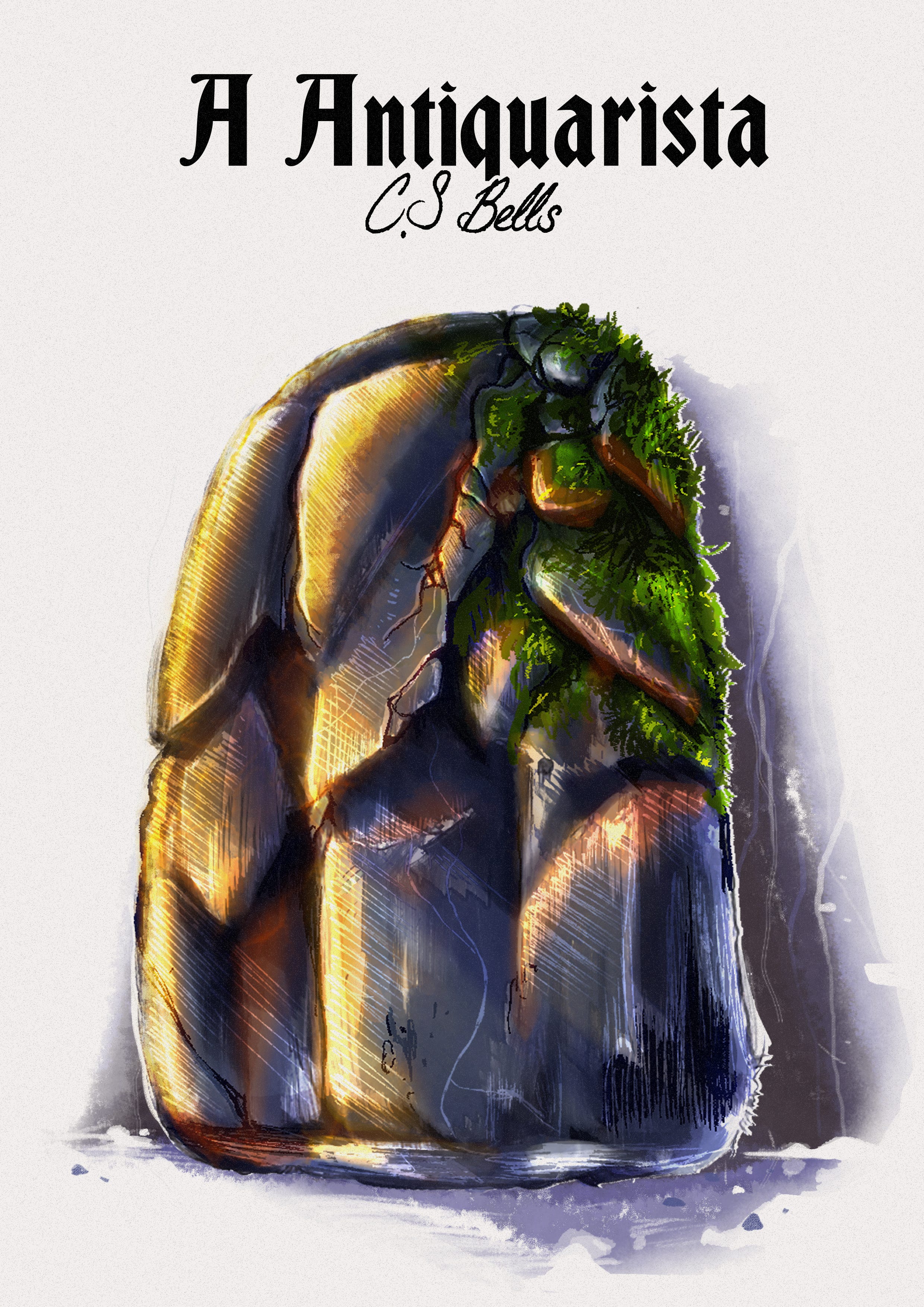
This story is pure atmosphere. Written with a subtly archaeological cadence, it invites us to walk slowly — like someone entering a cave, lighting an oil lamp with every step. C. S. Bells creates an intriguing protagonist: Luzia, the antiquarian of the title, who seems to hide more than she reveals. The wizard Carter is her expedition partner, but their relationship is marked by distrust and tension from the start. The artifact in question — a thunderstone of black rock, steeped in souls — works as a powerful metaphor for the human desire for a fresh start. Luzia wants to trigger a new catastrophe so the world can finally be reborn. The text then becomes a dark fable about the dangers of scientific ambition, of denied truths, of forces from the past that were never tamed. The final scene is grand, almost cinematic. And still it ends in silence. Like lightning that has already struck, but whose thunder still echoes in the dark.
What impresses me in this story is how power is always out of focus — it shows itself in subtle dread rather than grand gestures. Luzia at first seems to be a woman obsessed with knowledge; in the end she reveals herself as a kind of prophet of collapse, a priestess of chaos. Carter, on the other hand, is the wizard who refuses to act like one, guided more by doubt than by certainty. The text builds an almost mystical tension between these two forces: Luzia’s visionary destructiveness and Carter’s wish to preserve. And when the artifact — the thunderstone — finally explodes, it is more than the end of a confrontation; it is an allegory of what happens when the past refuses to stay buried. The spell in this story is also a reminder: there is no neutral knowledge. Every excavation has its cost.
About the Author
Born in Belo Horizonte, Minas Gerais, C.S. Bells has been writing since she was 17, but only in 2021 did she find the courage to show her work to the world. An archaeologist, she splits her time between pretending to be Indiana Jones and creating new universes to explore.
Story #3: Amber
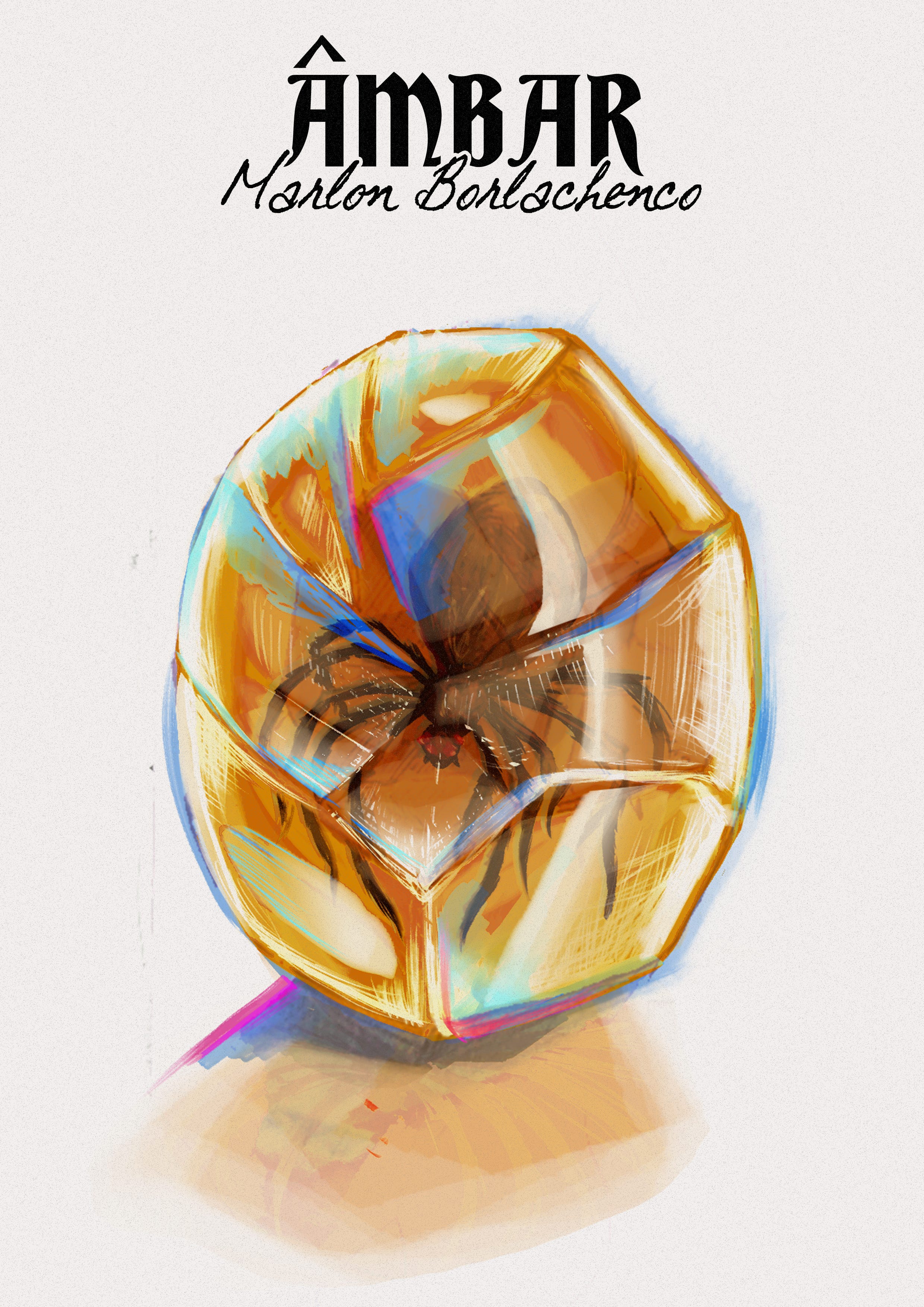
Here we have a story that flirts with urban horror, fantasy and dark humor. The plot follows Estefano, an ordinary man humiliated by corrupt bosses, who finds in a cursed shop the chance to get his revenge: a piece of amber holding an ancient spider that can control other spiders. The text grows out of the tension between the absurd and the tragic. Marlon writes with sarcasm, but also with precision. The shopkeeper is an interesting figure, straight out of a Gaiman story, with echoes of del Toro (not by chance, Estefano compares him to the director). The final scene, with spiders taking over the room while the TV reports bizarre deaths, is so visual it seems ready for adaptation. But behind the spectacle there is a more bitter question: what is revenge worth? And how many lives are lost on the way to “what is fair”? The story answers with silence and crawling legs.
Marlon’s story uses more direct language, but it is no less symbolic for that. Amber, the resin fossil that traps time, becomes here both the vessel of an ancient creature and the catalyst for a spiral of revenge that goes beyond the human. Estefano is tragic because he accepted so easily that hatred was all he had left, more than because he was deceived. The stone’s power is more than magic — it is a metaphor for what we let grow inside us when we choose not to heal. The final scene, with spiders taking over the room, mixes body horror with delicate irony: there is no peace for those who feed monsters. Revenge, even when it succeeds, demands company. And Estefano will never be alone again.
About the Author
Marlon Borlachenco is an independent writer from Paraná, a fan of terror, horror and science fiction. He loves good video games and is slightly addicted to caffeine. He usually publishes his stories for free online on several platforms and on his social media.
Conclusion
Relicário Bruxo is more than a collection of magical stories. It is a brief treatise on what we do with power when we find it, or when it finds us. Each story is driven by an artifact, yes, but the real engine is human intention.
No object has enough magic to resist the desire of whoever holds it. And maybe that is exactly where the danger lies. Power does not corrupt — we were already cracked when we found it.
For anyone who follows Brazilian fantasy and wants to see solid, well-written work with different and inventive voices, this anthology deserves a read. For those who write, it is also an important reminder: every good story is an artifact. Every narrative carries the risk of transformation. And the reader, like the customer in the shop from Marlon’s story, must always ask: am I ready to pay the price?
See you, explorers!
Originally published in Prosa & Pixel, on Substack. See it on Substack · Subscribe to Prosa & Pixel · All issues