Love as fiction’s secret language
Some people find love in reality. I found it in fiction first.
It is hard to remember the first book I read, and I do not remember much about my first comics either, though I remember my first games quite well. What I enjoy about trying to remember these things is finding the ones that marked me the most. I remember the first romance, the first fear, the first time I felt anger while reading, playing, rereading pages.
One of the most intense loves I have ever seen in a book lived in the shy dialogue between two characters who never said “I love you” to each other, though everything about them screamed it.
In the world of games, I experienced love in a game where I had to choose between the world and a single person. Can you imagine the weight of that decision? How do you solve something like that? I can, I lived it, however fantastical it was. I chose her.
In comics, love is always braver. It is where two heroes, one with a cape and one without, meet and define each other between explosions and time travel. Funny how they still found time to look at each other as if they were each other’s home.
I grew up believing love was a journey. Today I think it is also a language. One written in small gestures, between the lines, in silent decisions.
Let us talk a bit more about that.
Love in games:
Life is Strange
A friend recommended this game five years before I played it. I refused for a long time because I saw no fun in a game about narrative and choices, and today I work with exactly that. Life surprises us around every corner, and that was a sharp turn. Life is Strange showed me in many ways how strange life can be if you love too much or too little, but more than that, it showed me how much my choices matter.
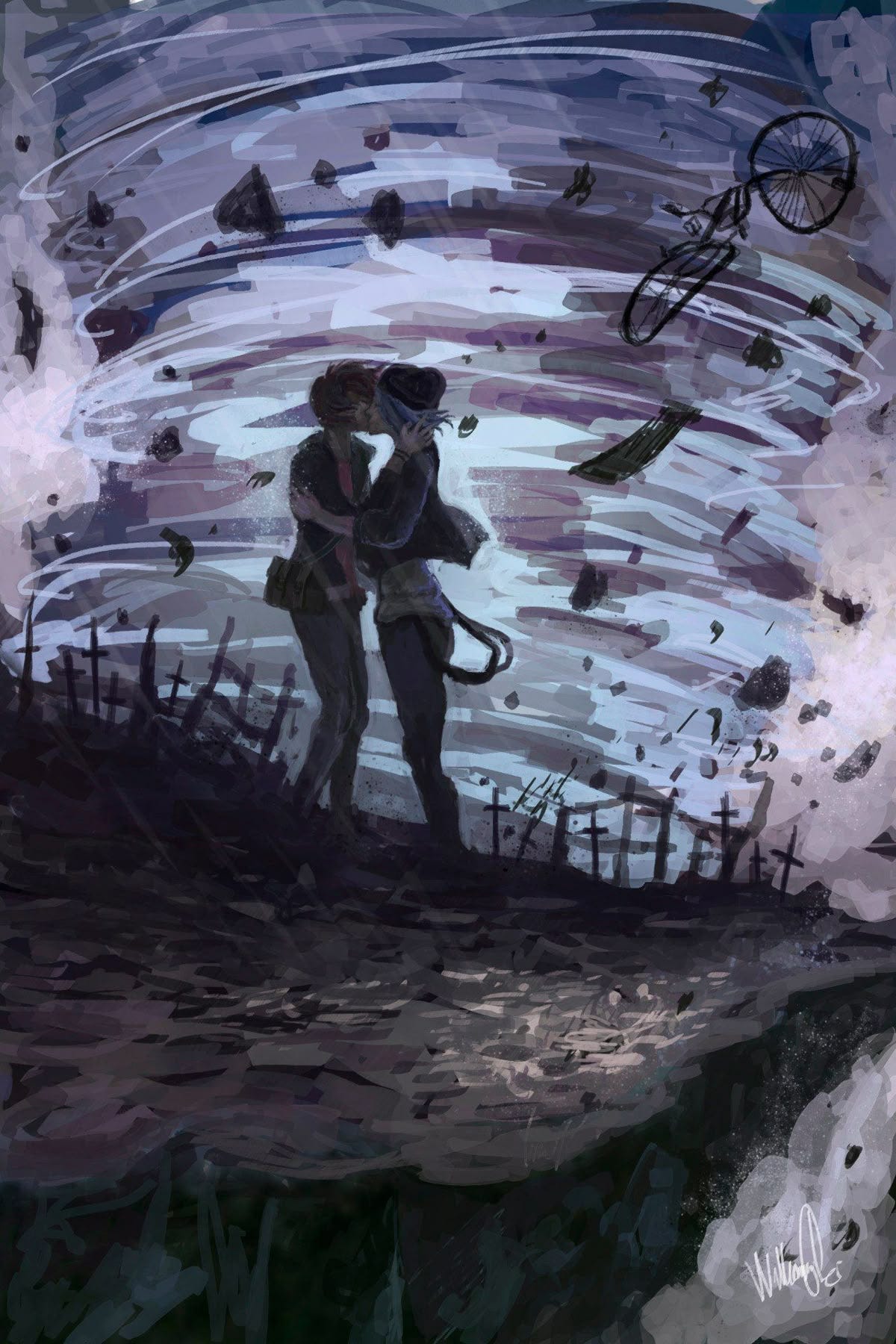
Max and Chloe are not a couple in the traditional sense. They are more than that: they are possibility. They are the “what if” that turns friendship into love, and love into destiny. The rewind mechanic in Life is Strange is a perfect metaphor for what we feel when we love: the urge to fix what went wrong, to redo words, to avoid pain.
But there comes a moment when Max can no longer escape the weight of choosing — and love reveals itself as courage rather than escape.
Loving is choosing, even when the world does not understand your decision. And some kinds of beauty only bloom at the edge of the impossible.
Final Fantasy VII
Everyone who likes RPGs has a favorite, and it is very common for that favorite to belong to a franchise like Final Fantasy or Dragon Quest. Mine is Final Fantasy VII. This was, without a doubt, where I first felt the pain of losing that beloved character, the one who helped with everything, guided you and dreamed alongside you.
When we meet Aerith, it is hard not to get into the essence of the character and, in everything she does, notice the purity, the kindness, the little details that make her who she is. All my life I have looked for that simplicity and beauty in someone, and this is where I first met it, where the idea that someone like that could exist was born. Today I call someone like that my fiancée.
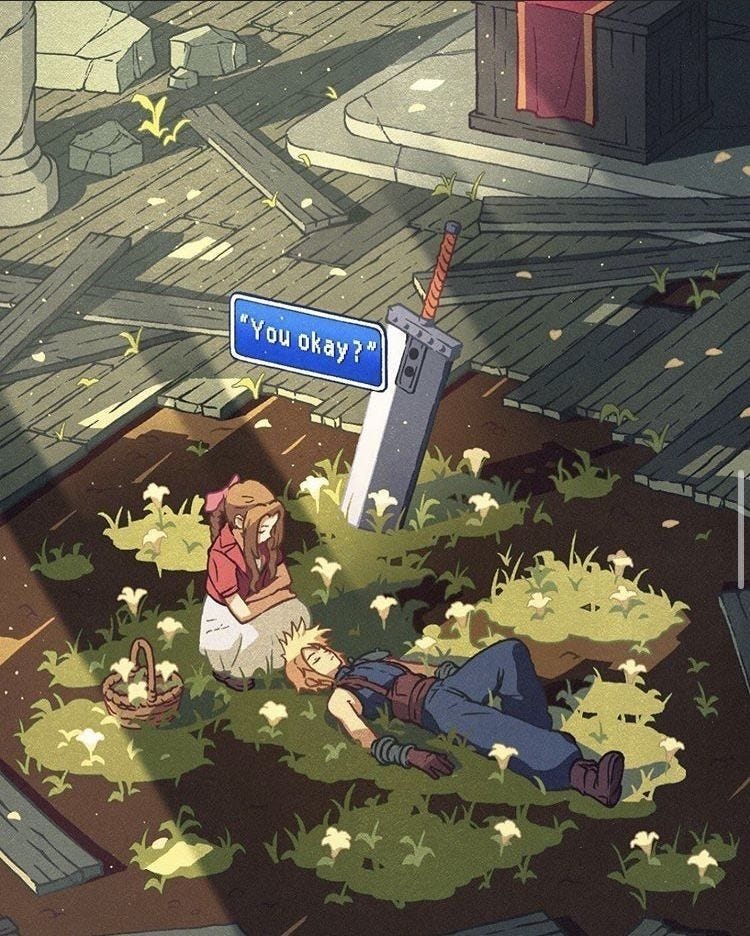
Aerith and Cloud share a short but intense time. It is a love that keeps shaping actions even after the end.
Sometimes the love that marks you is the brief one. Other times, it is the one that stays. And the heart is big enough to hold both.
Love in books:
The Name of the Wind & The Wise Man’s Fear – Patrick Rothfuss
Across two books, Patrick Rothfuss raised, for me, the bar for good fantasy worldbuilding. He sets rules, stories, mythologies and magic, but amid all that something else is happening: a romance, quieter than the silence of three parts that always opens the books. The love between Denna and Kvothe makes some readers angry, others understanding, and me emotional. It is impossible not to root for them, and it hurts a lot when they meet and things are not what we hoped.
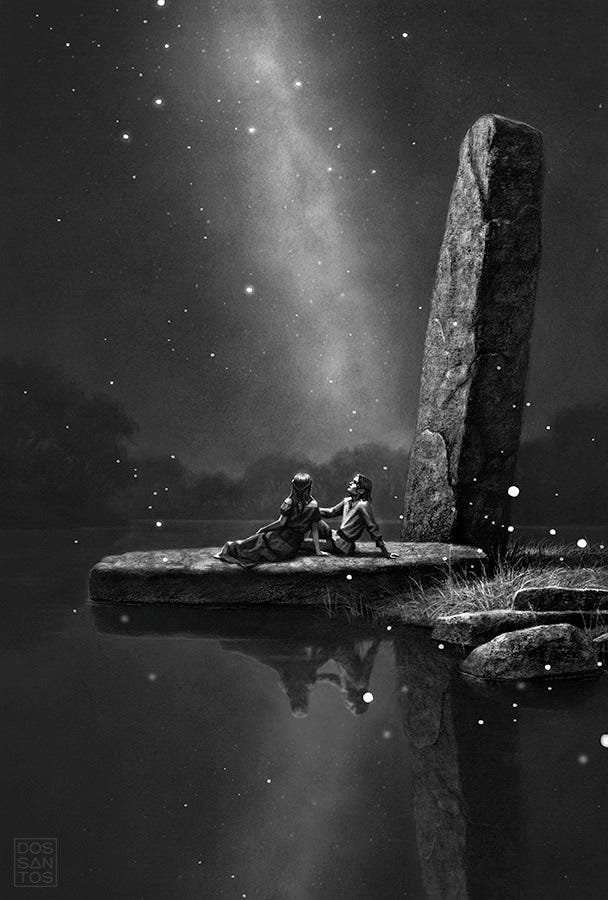
The reality Kvothe tells us about is hard and cold, and it is never the way we dream it. It is always an intense struggle to keep what you have and fight for what you do not. Kvothe taught me that we should not show pain, and that love lies beyond unspoken words, far beyond unfinished or interrupted gestures. This is the love that does not end.
Kvothe and Denna are an unfinished dance. One steps closer, the other pulls back. Neither of them knows exactly how to love, but they try anyway — with music, poetry, silences. It is a love built in empty spaces. She disappears, he waits. He pretends, she understands. And all of it creates a story of feelings that do not need to be resolved to be real.
Some love stories do not end. They echo. And some loves teach more through what goes unsaid than a thousand declarations.
They Both Die at the End – Adam Silvera
This is the kind of book many people see on TikTok and write down to never buy or read, thinking it is just another pointless teen romance with a false bottom to create an illusion of importance. The truth is that it is a good book and it presents ideas that still make me think today. I envy Adam for having this idea before I did. Here the romance is born as a doubt and grows like rain that starts as a drizzle and ends as a storm. Here the ending is not happy, and the title already tells you so.
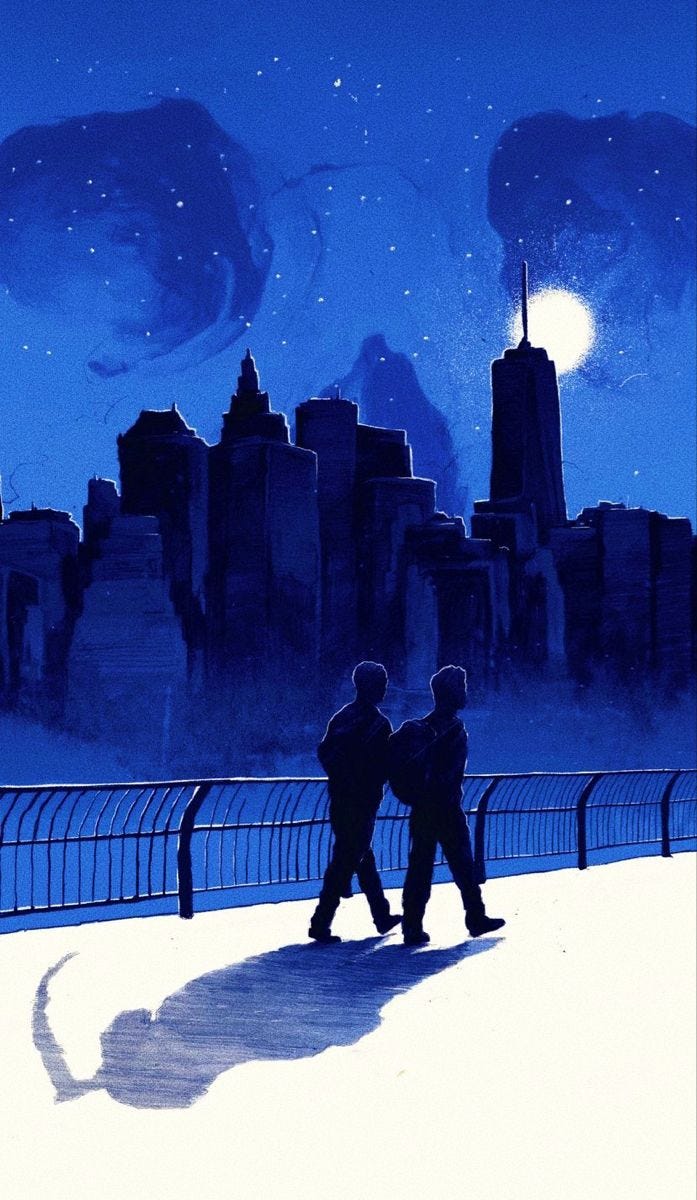
Mateo and Rufus find out they will die within the next 24 hours, and they decide to spend that last day together. What grows between them is more than a romance. It is a love that recognizes the urgency of life, the delicacy of the moment. It is the love that says “yes” even knowing there is no tomorrow.
Loving, sometimes, is accepting that everything will be brief — and diving in headfirst anyway. Because one day well lived can be worth more than a whole lukewarm life.
Love in comics:
Superman and Lois Lane
I only realized how interesting this romance was when I did not see it happen, or rather, when I saw it prevented from happening. In the Injustice comics and game, Superman loses Lois in a surprise attack by the Joker. It drives him mad, and that is how I understood where that “god” kept his balance. It is interesting to see how far characters go when they lose what matters most. Superman without Lois Lane is a dictator, a mass murderer, cruel… that is terrifying.
Clark Kent is invulnerable. Except when he looks at Lois.
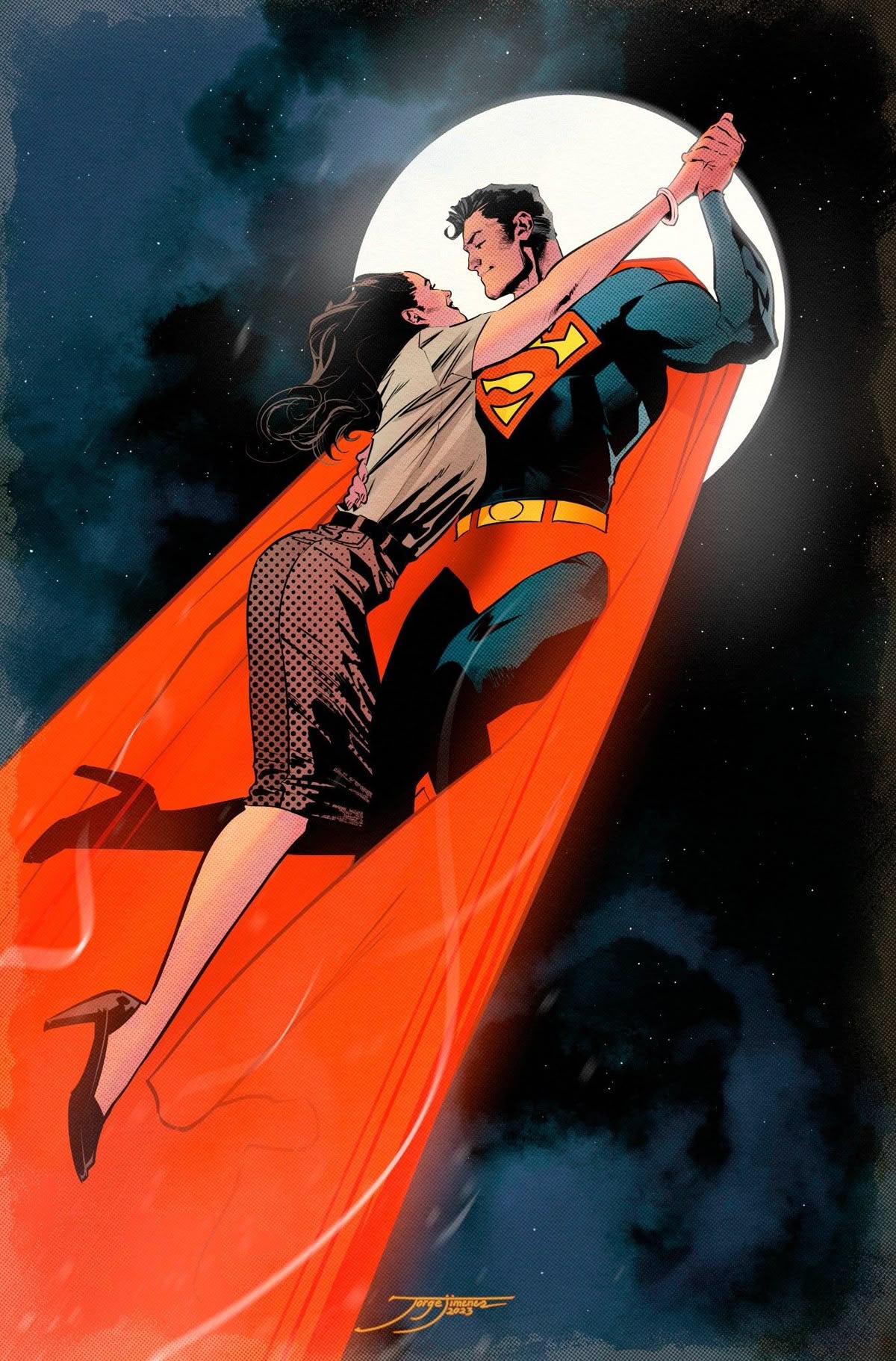
The beauty of this couple lies in the balance between myth and human. He is a god among mortals. She is a journalist with a nose for the truth — including the truth about feelings. They are partners. They complete each other without erasing each other.
And even when the world falls apart, even when Clark has to carry the planet on his shoulders, he always comes back to her.
The real superpower is loving someone and being loved back without hiding who you are. Lois is the anchor that keeps Clark from getting lost in the sky.
Peter Parker and Gwen Stacy
Those who know this romance only for its tragedy may not realize how much Peter and Gwen were, for a while, the very definition of hope. Before the pain, there was laughter. Before the loss, there were promises. Gwen was more than Peter’s love interest — she was a breath of air amid the chaos, the intelligence that challenged him, the kindness that reminded him who he was under the mask.
Peter is responsibility. Gwen, lightness. Together they balanced the hero’s burden with human sweetness.
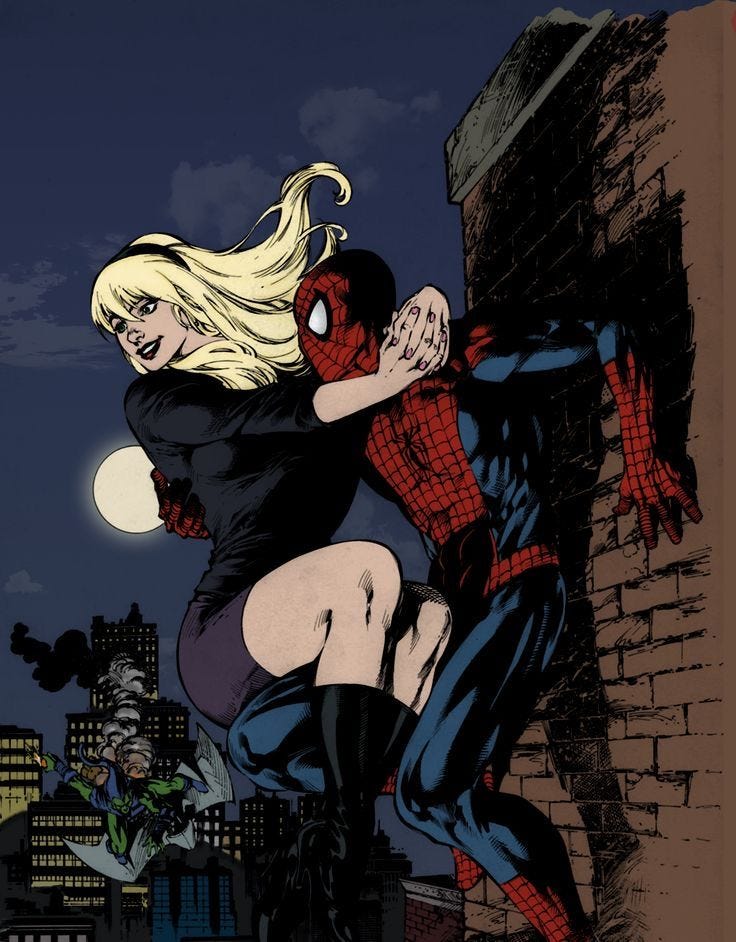
Her absence echoes as much as her presence once shone. Because Gwen was more than a tragic chapter; she was the heart of an era. And even with so many stories retold, she remains the one Peter never forgot. Because before Mary Jane said “Go get ’em, tiger…”, Gwen had already shown him that love could be calm, real, possible.
Sometimes love does not need to last to be eternal. And some names, when spoken in silence, still make the world stop for a second.
Where worlds meet
Games taught me that love is a choice. Books, that it can be silent and still scream. Comics, that even in the middle of chaos there is room for constancy, affection and reunions. And if we stop to think about it, all these stories only work because, deep down, we want to believe this:
That love exists. That it transforms. That it can be ours — even if only for a chapter.
Fiction prepares us for life because it shows us what to look for, even though it is not the same as reality:
The courage to love.
The beauty of being vulnerable.
The hope that, around some narrative corner, there is always someone waiting for us.
And that, as books and games say, sometimes love saves the world. Other times, it is the only thing that saves us from ourselves.
Something to think about together:
Which fictional love story marked you the most?
Have you ever felt represented by a couple from a game, comic or book?
Is there a story that gave you the strength to love again?
See you, Explorers.
Originally published in Prosa & Pixel, on Substack. See it on Substack · Subscribe to Prosa & Pixel · All issues