For me, writing terror and horror always runs through a strange path in the mind. I try my hardest to build nightmares more vivid than the ones I have had and to scare the reader or player as much as the protagonist in the scene, but of course, I do not always get there. And that is okay.
There is a dark dynamic in this process that makes it both weird and pleasurable. It is not as simple as writing good old medieval fantasy; I believe horror especially forces you to open rooms in your mind you would ignore on an ordinary day. And speaking of ordinary days, when you are deeply immersed in the atmosphere you are trying to create and convey, it gets a bit harder to write about ordinary things. Of course, the experience is unique and different for each of us.
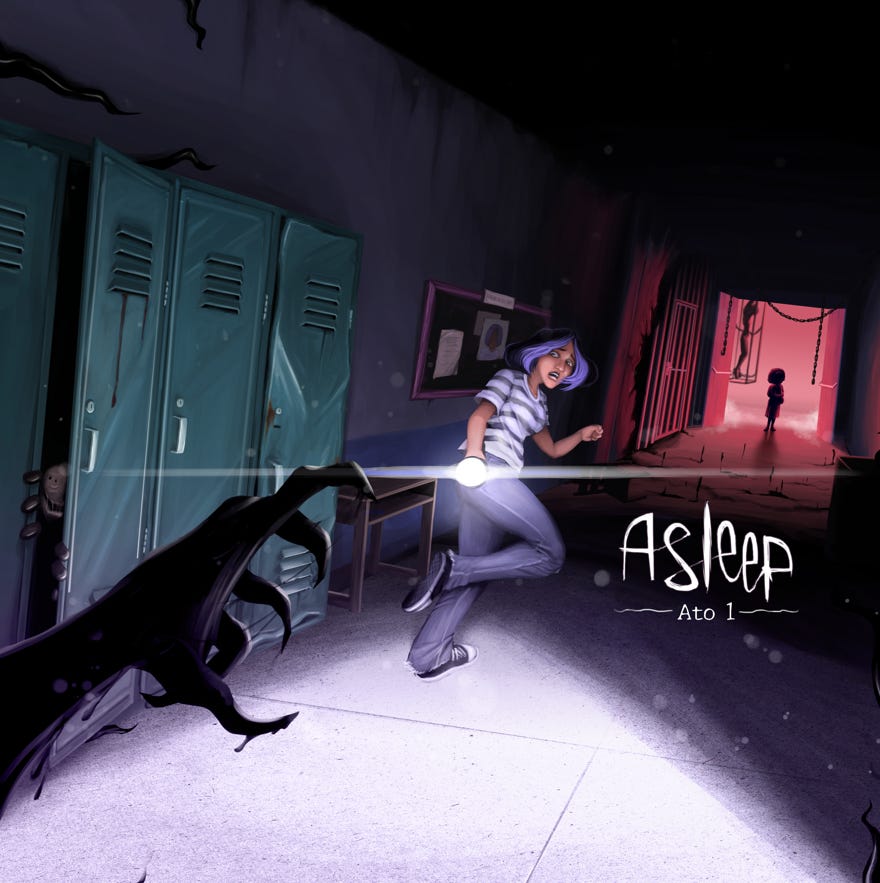
When we talk about writing a game specifically, some aspects of the psychological immersion you need for good writing to flow build up in a spiral of events, one leading to the next, until you are so caught up that it is hard to look away from the screen. After all, is that not how you want the player to feel? Writing Asleep is like that. It is never just any day, it is never simple, and it is more than sitting down and writing; there is a whole ritual of psychological preparation for me. We are talking about a deep narrative, and more than that, a deep interactive and immersive narrative told through many visual, sound and written elements. Yes, it is quite complex. But it is still fun.
A few days after losing my grandmother, during the pandemic, I got a message from a friend, Dex Drakon, the mind, artist, game designer and creator behind Asleep. It was an invitation: he wanted me to help write a game he had been planning for quite a few years. He said: “It’s a horror game, it’s set here in Piauí, and it feels like Silent Hill.” I did not say yes right away. I thought, reflected, analyzed the game’s narrative, and only then did I agree. Do you know why? Because I did not feel ready for what was coming.
Little did I know that nothing would prepare me better to write the terror and horror of Asleep than diving headfirst into the world Dex created and becoming part of it, understanding every inch of Ana Lúcia (who at the time was in the hands of Juliana, a talented writer on the project) and digging up all my psychological problems to understand better what it meant to be a tormented person like the protagonist and her world.
Next, let us talk a bit about the technical side of all this, the theory I studied and the practice I lived, with some insights for beginners and behind-the-scenes stories for the more curious. If you want to understand more about designing the narrative of a terror/horror game, buckle up, here we go. The tunnel is long.
The Horror Toolbox: Technical Fundamentals for Beginners
Before we talk about writing aspects that can guide your first steps, let us talk about your personal goals with writing. Think about it: “What do I want when I write this?”. Having a clear goal in your writing guides you from the first words to the end of an important dialogue, and writing without intent is just words in the wind. It has no practical use, and in games every word counts, literally. Every word is one more number when the budget for localization into other languages is calculated, or for the original voice acting, if there is any. That is why everything must be thought through, calculated and crafted with great care.
Terror vs. Horror:
When we come across the terms “terror” and “horror”, it is common to think they are the same thing, synonyms for one genre or different paths to the same result. That is not quite right, especially in immersive, interactive narratives (games). Telling these two narrative aspects apart is essential to building the thread of tension that will guide the player to the emotional payoff they have been expecting since they bought the game. Remember, buying something is also believing in a promise. When I bought a horror game, I believed that game’s promise (through a trailer, gameplay or a review) that it would be good. And what is a good horror game?
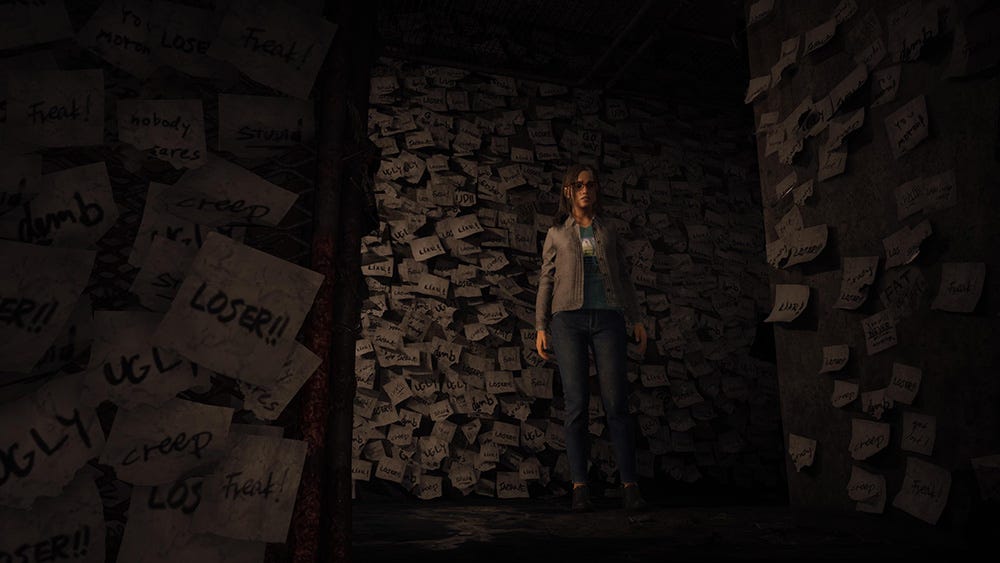
Terror: It is the narrative thread of tension, the player’s psychological enemy, the sound they cannot place, the distant scream that seems to belong to some monster’s victim, the controller vibrating as the music gets tense and they know something is coming. It is terrifying not to know what is behind the door that opened by itself.
Horror: It is tension made real. It is when you find the grotesque creature that was crawling down the hallway behind that door, when a serial killer grabs you and you feel you have to fight for your life, and also when you come face to face with the visceral, the gore, the blood and guts of animals killed by a werewolf. Horror is physical. Running into a zombie boar in the forest is horror.
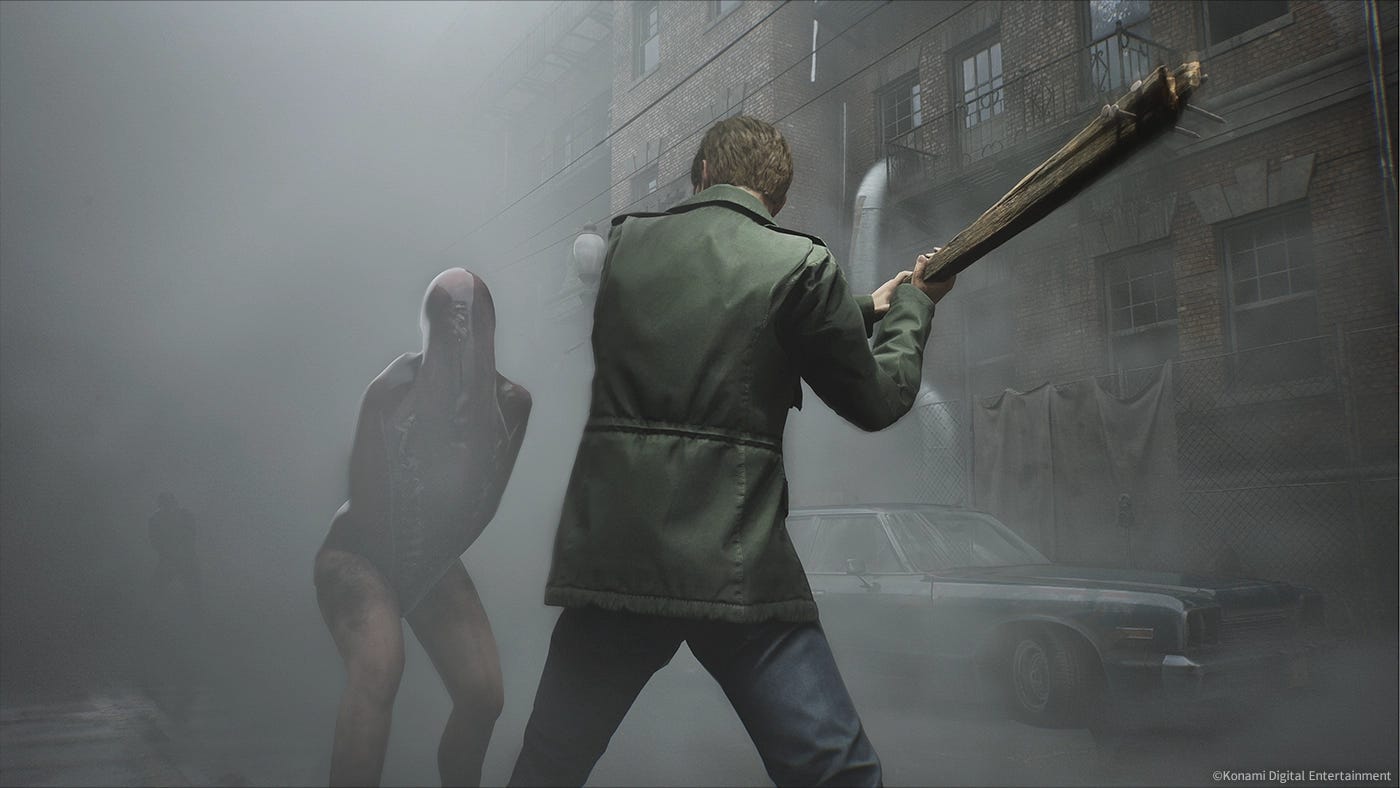
Reflect: how can a writer dose these two elements to control the rhythm of a game’s narrative tension?
Linear vs. Interactive Narrative:
As I have said in other issues, this is where books and prose differ from games and interactive narratives in general. The linearity of books holds attention, guarantees emotional moments and gives the writer total freedom and control over what comes next for the user (reader). Of course, it is a more comfortable environment to work in than games, but that does not make it less interesting or important. It is just a different way of telling stories. From the point of view of interactive narrative, there is something that puts games at the very top of entertainment: “the user is part of the story.” The player being part of the narrative they consume is without a doubt what holds attention most, right after the core mechanics.
Linear narrative: In some courses, you will see teachers describe games where you make no decisions that branch the plot as “linear narrative games”, which I consider a mistake. After all, even the most linear games are still played in a unique way by each person who ventures into them. I did not play God of War the same way you did, I guarantee it, and however close our builds were at the end of the main campaign, I may still have explored places you did not, found dialogue you did not, chests, items and so on. I may have literally lived a different game from yours, even with a “linear” narrative. That is another aspect of games we call emergent narrative: the narrative that emerges from gameplay, from how each of us lives the game individually. So, in my view (a limited one, by the way), no game has a truly linear narrative, even though many have the “same” beginning and ending in terms of fixed plot. Ignoring a game’s emergent narrative is a mistake.
Interactive narrative: This is the narrative of every game, because, as I said, all games are interactive media. Interacting with what you see and consume (content) is what makes a game a game. By now I think it is clear that a game’s story is told through the player’s interactions with it, and not only through text delivered to the player by preset, interconnected systems during gameplay. That said, you need care and attention when building these narratives, especially in terror and horror, because unlike in a book, in games you have to anticipate what happens if the player leaves the main path. What happens if they shoot a trash can instead of going through the door? What can we add when they run in the opposite direction from where the scenery is guiding them? And believe me, you will never be able to predict every possible move your player makes, and that can make their experience really interesting.
Essential Tools for Building Tension:
The Power of Negative Space in Writing: Much of the creative process of building tension is finding ways to tell without text, showing the player what will plant ideas in their mind and set off wild speculation. The real secret sauce of tension lives in the player’s mind; it is the thing left unsaid.
When you show a setting with forensic markers indicating someone has already died there, and the game deals with haunted places, it is very easy for the player to connect the dots: they can quickly deduce the place is haunted by someone who died there. That can help create an atmosphere that later, with more resources, you can contradict to build a narrative twist that uses more than visuals, and then what is said carries more meaning. After investigating for a while, the player discovers through signs of haunting, voices, a bit of text and some documents that the spirit haunting the place actually belongs to the murderer, who was massacred by rivals in prison, and not to his victim.
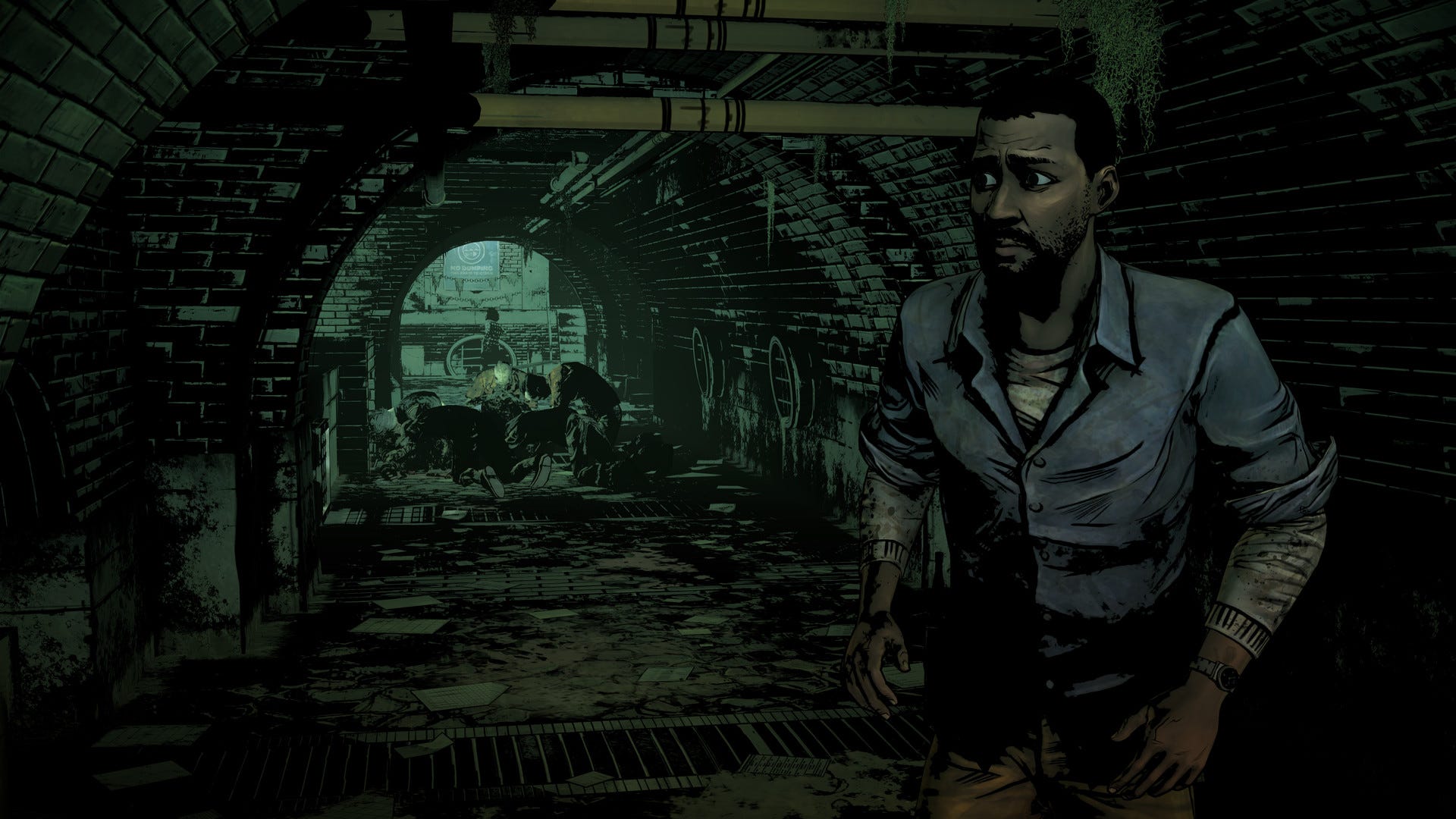
Unreliable Narrators: Rarely, during a game, do you as a player question the truth of the information you are given. That is a curious fact. Why do we tend to trust NPCs so much? What if they are not that trustworthy? What if an NPC betrays the player? What if an old man in a strange village warns you that people are disappearing and you should be careful, when he is actually the monster who devours them on full-moon nights? It is fascinating how we can take the idea of unreliable narrators to another level in interactive narratives, and making use of it is an essential part of creating tension, terror and horror. The absolute truth is that every player (and every reader) loves being fooled; it is the most golden emotional payoff you can give. What if the map you found was scribbled by an enemy? What if the sword they handed you is cursed? What if the person who says they are protecting you is actually holding you captive? This narrative tool needs great care, but if you understand it, use it. It will be twice the fun.
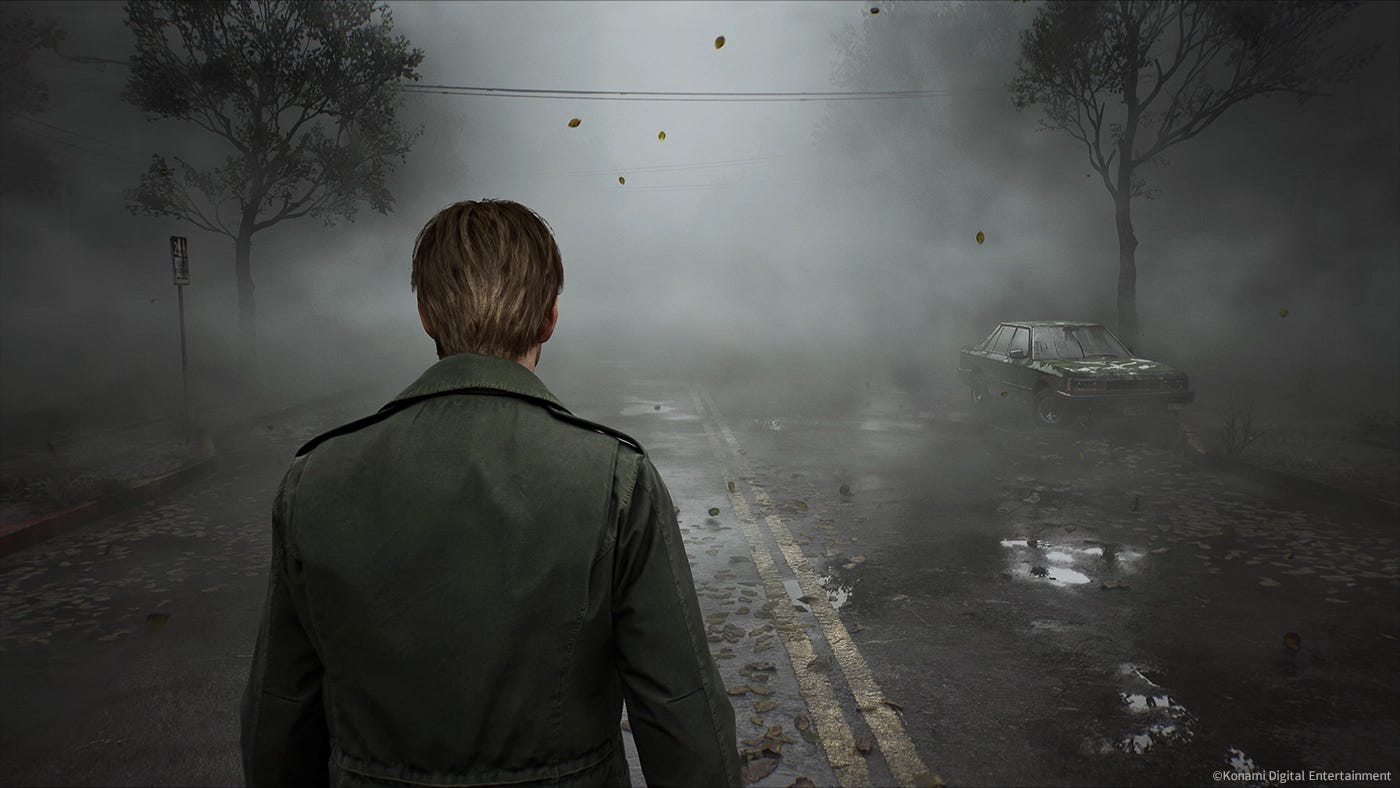
Worldbuilding Through the Environment: The famous environmental storytelling is one of the most used spices in game production today. Telling the story through the environment (as I mentioned in the first point) is an essential part of the games industry’s show-don’t-tell approach. It can make art more expensive, but it makes localization and translation more affordable, since there is less text in the project. And of course, it makes immersion less broken, more fluid, and the pacing more natural as well. Here, one of the things a narrative designer has to consider is level design, which makes the game’s “stage” work for the player and keeps the (mechanical) experience interesting. All of it must be aligned with the narrative so the environment can tell a good story. Among the games that do this masterfully are The Last of Us, BioShock, Dark Souls, Shadow of the Colossus and more.
Case Study: Asleep
Now let us talk a bit about my work on Asleep, especially narrative aspects I worked on directly. I will try to keep this part as spoiler-free as possible, so do not worry if you have not played it yet. In fact, if you have not, go right here and get your copy.
Writing a Fragmented Protagonist: Ana Lúcia
When I joined the project, the protagonist, Ana Lúcia, was already a well-outlined, defined and developed character. Juliana, the project’s writer at the time, had defined many of the character’s psychological traits, which were respected and kept throughout the whole project. After all, no man can write a woman as well as a woman can, and knowing that was fundamental to creating an interesting, real character. So what was my role? Well, my role was a complex personal challenge.
Personal challenge: Designing narrative delivery systems that would make sure the player saw and perceived the same Ana Lúcia that Juliana, Dex and I saw and perceived. I admit it is much more complex than that, but it is the best way I found to explain it. When you create a character like Ana Lúcia, with all her nightmares, her troubled mind and personal problems, you need extreme care in how you deliver that to the player, and more, you need good literary, film and other references that give you the foundation to support your narrative delivery systems.
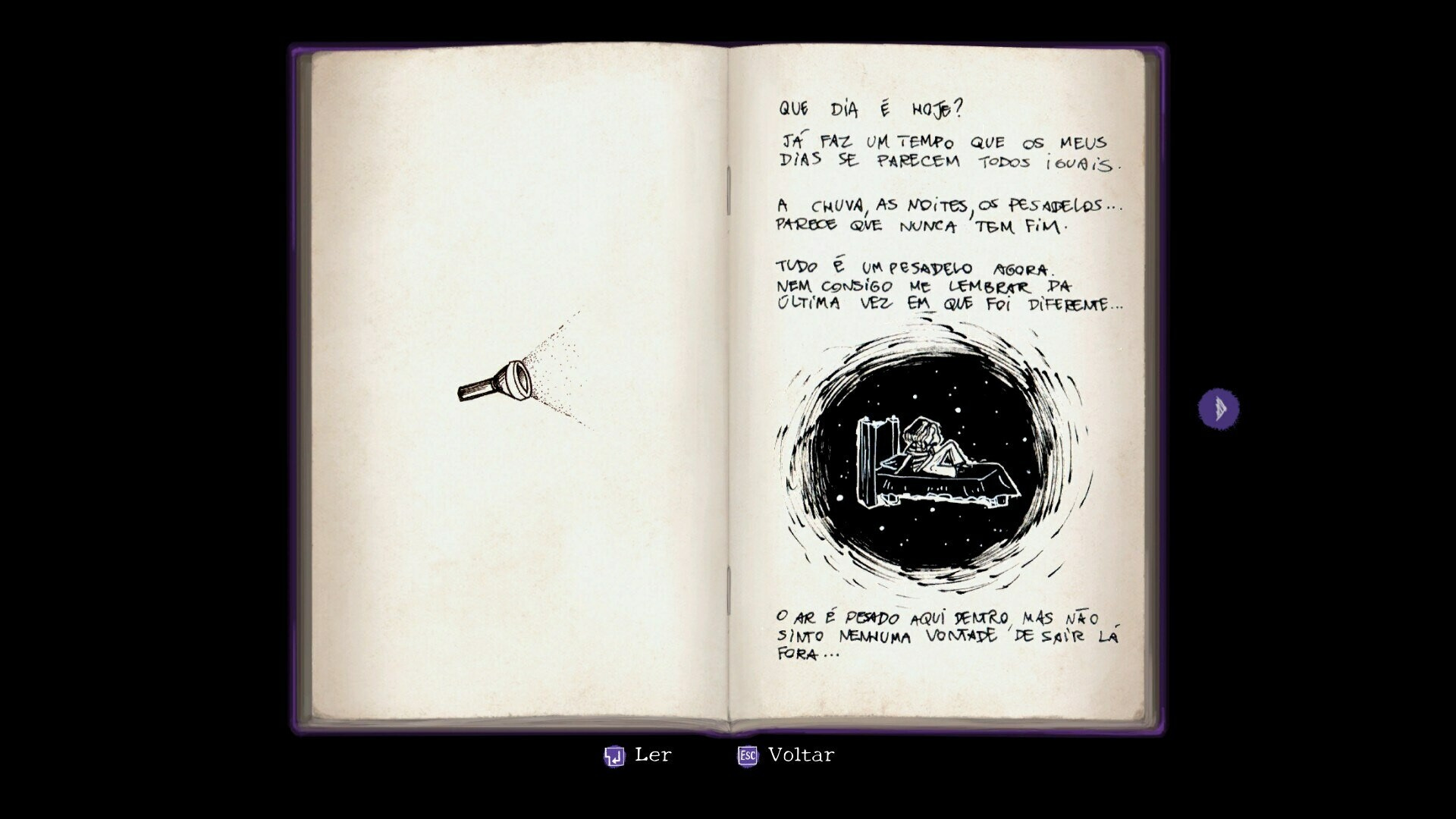
Applied technique: Among the techniques we used to deliver narrative, besides dialogue, monologues, spot views (where you click and the protagonist comments on something), item descriptions and so on, together we built a sketchbook for Ana Lúcia and a system we internally called “paranoia”. These two speak to the player in different ways, but they are essentially narrative delivery tools. The sketchbook is more obvious in that sense: it is where you find many of the protagonist’s thoughts about what is happening to her, in her own words, and there you can feel that you are not Ana Lúcia, though you can identify with her. That is essential for the player to tell their own feelings apart from what the protagonist is going through, while still identifying with her. The “paranoia” system is more visual. It is an artistic way we found to represent anxiety, fear, tension and everything bad that comes with them, for when she is in situations that bring that on. It is narrative mechanics in practice.
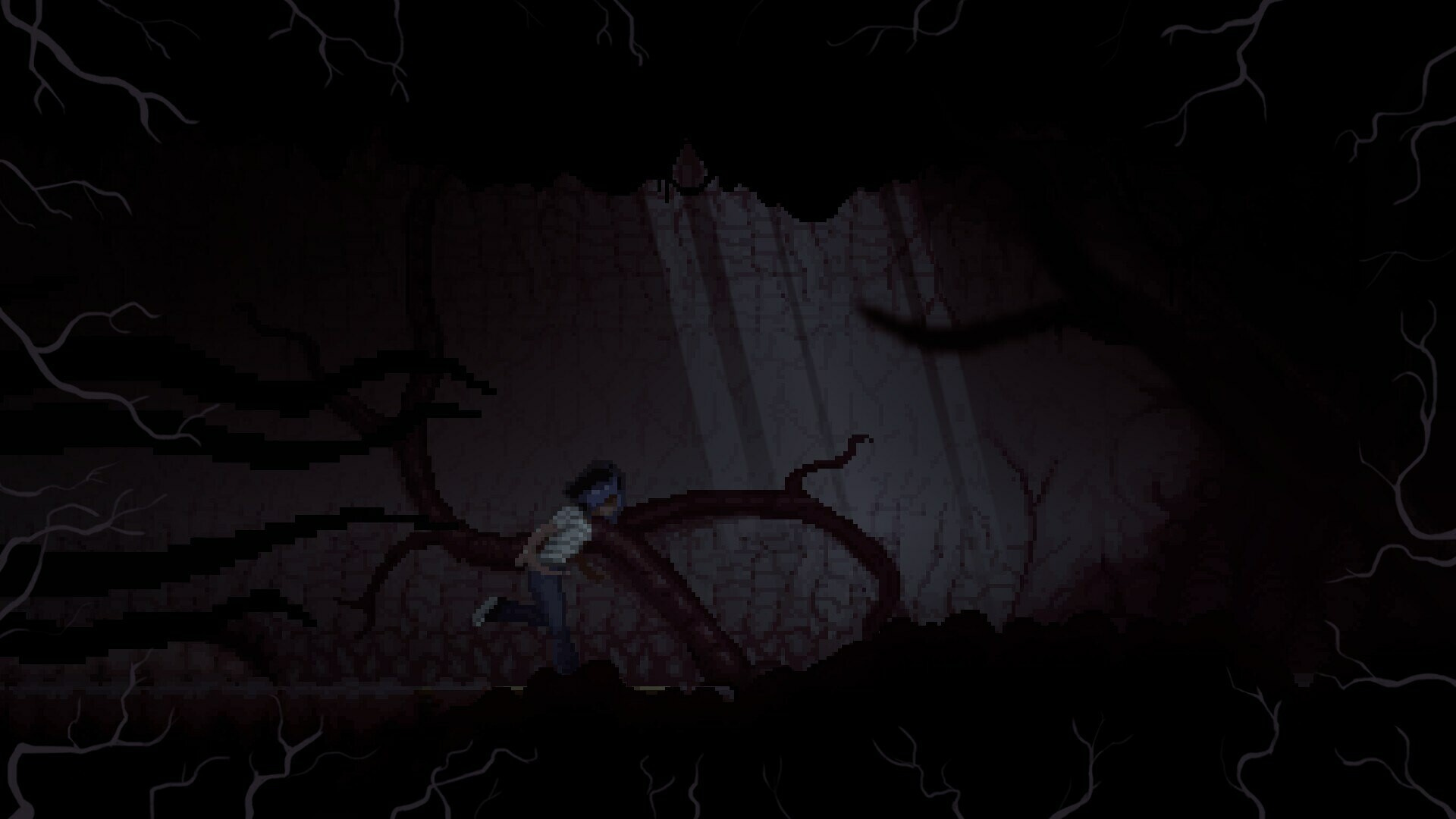
The Art of Writing an Empty World (or not):
When I saw the first parts of Asleep, already working on the project, I asked about NPCs and realized there would be very few, which left me with a protagonist walking alone through some very strange settings. So I asked myself: How am I going to tell a story with one person walking through empty settings most of the time?
That is where the magic of environmental storytelling came in, and more than that: besides the environment telling a good story, I would need to create ways for it to communicate with Ana Lúcia too, to tell her what she did not know and hoped to learn, without ever breaking the narrative rhythm and the experience of the one controlling her, the player. But of course, not everything is simple, and here came another personal challenge.
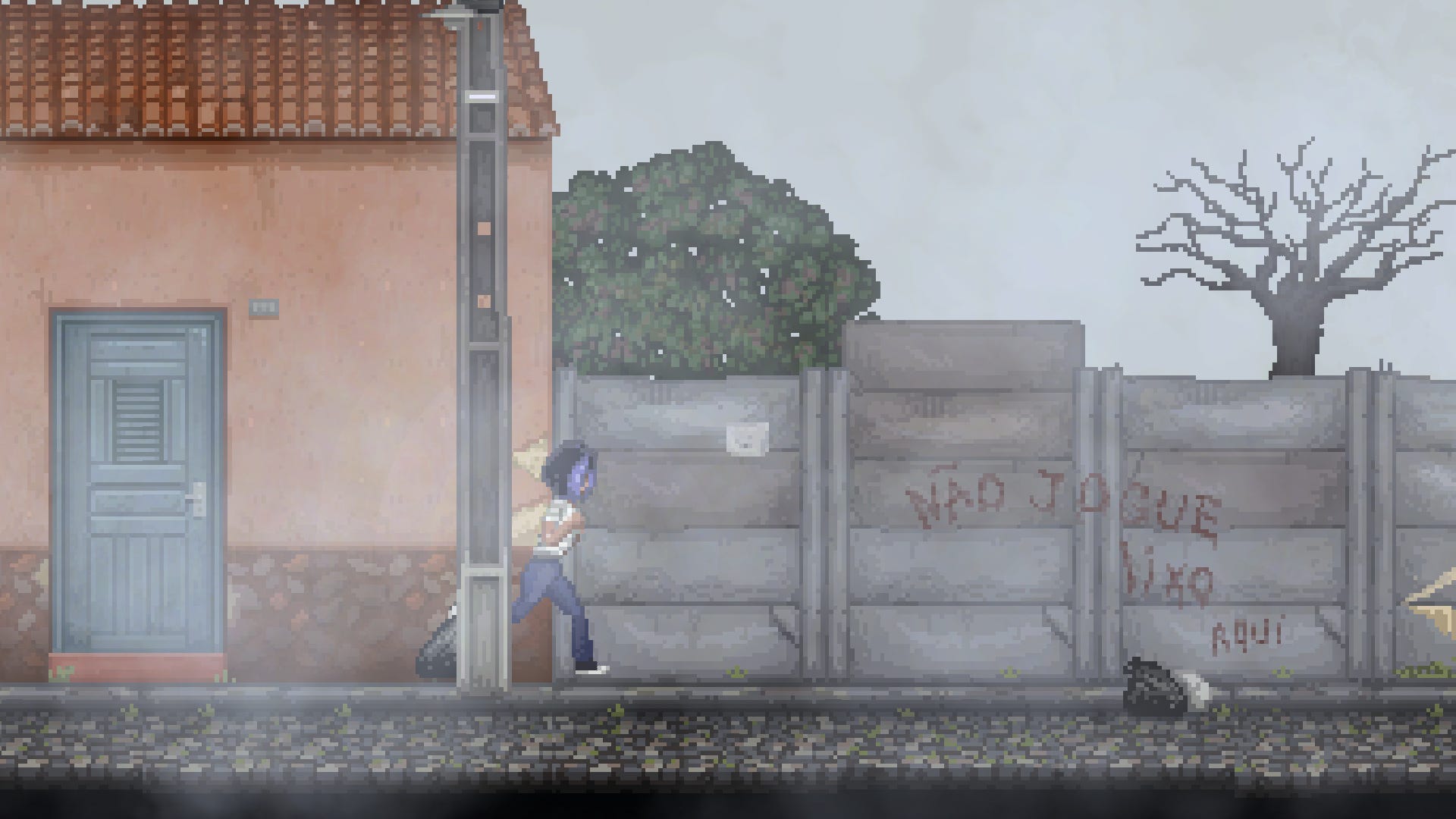
Personal challenge: How do you make sure the player never knows more than Ana Lúcia? How do you make the player feel the mystery and the narrative she lives at the same intensity? That is the kind of challenge you face when you separate the player and the story’s protagonist too much. After all, I did not want the player to feel SO much in Ana Lúcia’s skin that they took on her psychological problems too, but I wanted them to feel the pain of those problems by understanding them, which is different. You can find this narrative complexity in other games too; Silent Hill does it with unmatched mastery. If you have never played it and have access to a PlayStation 5, I recommend Silent Hill: The Short Message.
Applied technique: This is where one of Asleep’s narrative pillars came from, one we barely discussed but everyone understood: Asleep needed to be mysterious and keep that quality until its last minute of play, and its narrative conclusions would be built by the players without us interfering in their thought process beyond what was needed for everything to be understood as planned. Yes, my friends, writing games is not easy. Of course, many things helped keep the mystery alive and the player immersed and curious, including well-built puzzles and documents scattered across the different settings. Things like that give the player a library of information shared with the protagonist, which they can revisit, reread and use to build their own theories.
Sparking the Debate:
Before we wrap up, I would like to raise a few questions so you have something to comment on below.
Question 1: For you, what is the biggest challenge in turning a terror/horror idea into an interactive narrative?
Question 2 (for the more experienced): In your projects, which terror/horror “tool” do you use most to build tension: the power of suggestion or worldbuilding through the environment? Share an example.
Question 3: In Asleep, sanity is a resource. How do you see the future of game mechanics that explore a character’s psychological state? Does it enrich the genre or risk becoming a cliché?
Conclusion: The Collective Nightmare
That is it, folks. I think I managed to cover some of the narrative design aspects of terror/horror games I consider fundamental, especially if you are new to the field or just curious. Either way, if you have any questions, leave a comment and I will answer as soon as possible.
Thank you so much to everyone who made it this far, and for your patience. It has been a long time since I posted anything here, and believe me, it was not for lack of wanting to.
If you have a topic suggestion for the next issue, you know what to do, just comment.
Thank you, and see you next time, explorers!
Originally published in Prosa & Pixel, on Substack. See it on Substack · Subscribe to Prosa & Pixel · All issues