I think this will be the simplest issue so far: an honest conversation about the influences that led me to writing. The influences presented here come from games, comics and books. They are shared memories, thoughts that you, reader, probably have too if, after finishing something incredible, you ask yourself: “what if I wrote something too?”. I have asked myself that before.
As a kid I did not have many resources. The games I knew were the ones available at the nearest rental shop, where 50 cents bought me 30 minutes of fun far from the world I lived in. Rarely, borrowing from a friend or visiting a classmate, did I have a console in front of me that was not a rental-shop machine. Having a console of my own was a very distant idea.
It was no different with books and comics. Books were easier to find; I always went to the school library, which did not have much of interest, but now and then I found something cool. Comics were different. I always saw them at the newsstands downtown or at the bus station when I passed by, but I never had money to buy them. I thought they were expensive, but beautiful. They did not appeal to me that much, though, not yet.
A lack of resources pushes your mind toward an abyss. You can throw yourself in, envy those who have, feel anger for not having, do wrong things to get it (and how often I saw that happen…), or, like me, you can create. Create your own stories, your own books, comics and games, invent games to play, run far from psychological loneliness by giving yourself to art. Art saves; more than that, it heals. That is undeniable.
I chose to create.
Remembering the first pixels
When I was somewhere between 4 and 6, I do not remember exactly, my older brother took me to a video game rental shop for the first time. It was a few meters from home. He sat me on a stool and stopped me from falling several times while I, still not understanding the seat had no backrest, kept trying to lean back. He was playing something that, at least two years later, would be the reason for a few fights at home with my mom.
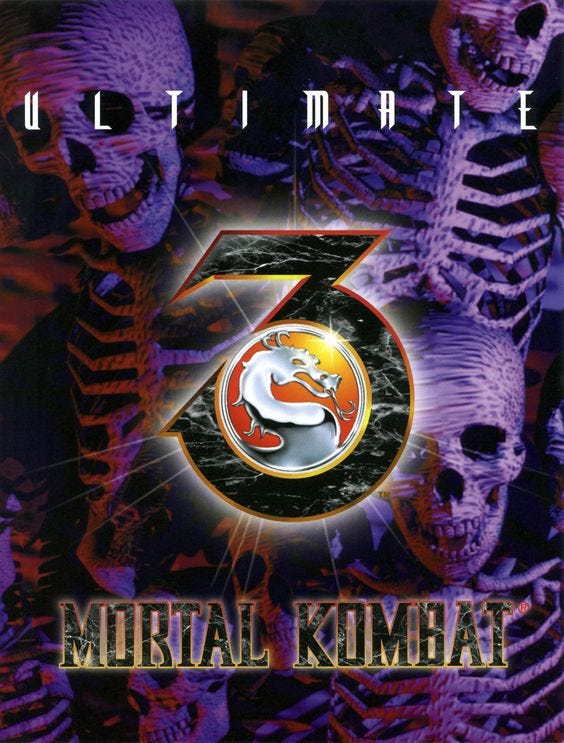
My brother was not good at that game, as he realized some time later. Back then it was all I wanted: to play Mortal Kombat with friends and now and then some Mario, but the really cool thing was the fighting, the screams, the brutalities and fatalities. Too young and clueless, I once took 50 cents from my mom without asking so I could play it one time. I got a spanking, the kind that teaches you. But do you know the most interesting thing about that time? I did not care about any game’s story. I cared about one single thing, which for me is the real reason games exist: Fun.
Playing to have fun is the foundation of the idea of “playing”, and I only realized it years later. When you are a child, you do not consciously choose to have fun. You do what you do because you want to, and fun is the common consequence of everything you want to do. The question I leave here, as a reflection, is: When did we stop acting like that and start acting like adults?
I will quote “The Name of the Wind” ahead of time; I will talk more about this book later:
“When we are children we rarely think about the future. That innocence leaves us free to enjoy ourselves as few adults ever can. The day we start worrying about the future is also the day we leave childhood behind.”
- Patrick Rothfuss
Now, back to the main subject, games. Let me show you the first game that made me want to write stories, the first game I finished and then felt a huge urge to open a notebook and write down my ideas.
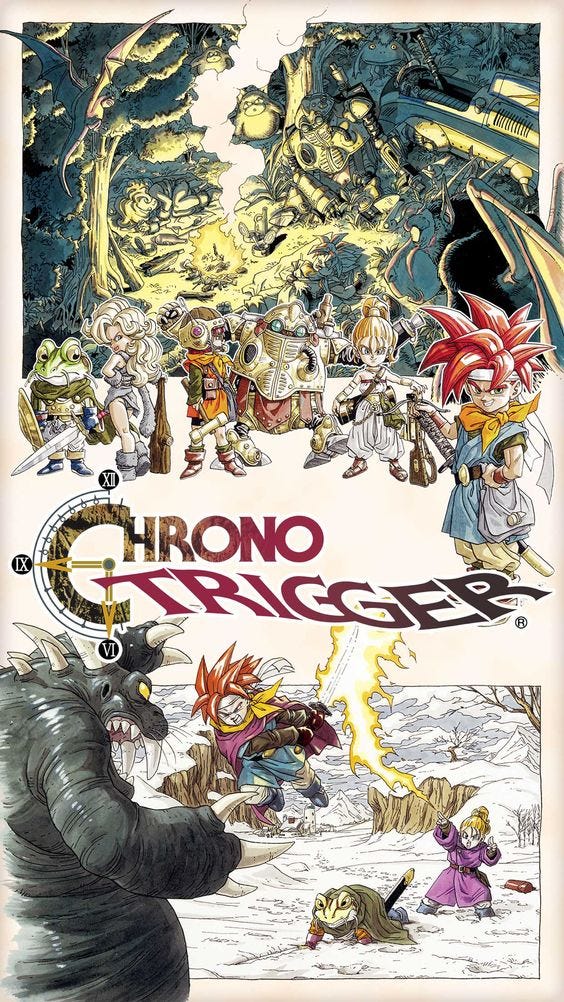
This game is about so many things it is hard to describe: friendship, adventure, power, corruption, time travel, parallel realities, cursed warriors and charismatic villains. It is impossible to play Chrono Trigger and not want more, and for those who want more and cannot find it, all that is left is to create. And when you start creating, you realize it is no longer more of that you want, it is more of something else… but what?
Finding the answer to that is one of a writer’s greatest challenges. We are cursed with a restlessness that wakes up when we find good stories, a restlessness that inspires but also punishes, because as long as the stories living inside you are not out in the world, you do not feel well. Of course, this is more about me than about you, but if you relate, comment below, let us talk.
And although Chrono Trigger triggered something in me about creating new worlds and stories, it was not what got me started. Before I really began writing for games, I would walk a hard road. I would say this game was just a stone in my shoe, a shoe I forced myself to wear, and the moment I took it off because of that stone, I felt how much I needed a new pair.
Now I will talk about one last game on this list of influences that marked me between 2004 and 2016. This one in particular I played during a very dark phase of my life, and I felt that, using it as a refuge, I could talk to several versions of myself I saw represented there. Unresolved versions of a David or a Kael that I needed to understand, get to know, listen to and resolve. I would say that if it were not for Life is Strange, I would never have dived into game writing the way I did, because it was the first game that told me: “hey, here is your purpose in writing.”
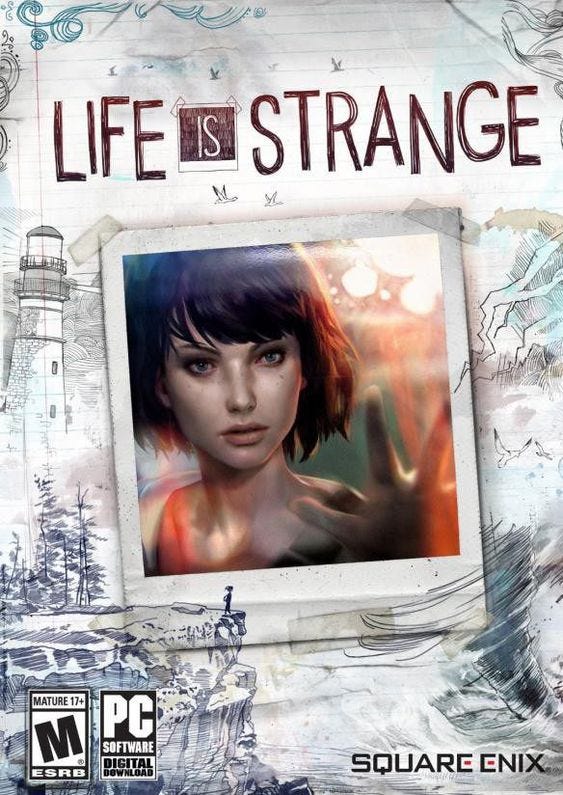
To enchant, to move, to teach and to captivate: those are this game’s achievements. And that defines purpose in writing for me. I want to do that too; more than that, I need to do it. I need to move, enchant, captivate and teach. I feel it deeply, that someone, somewhere, needs to read something of mine, and that it will save that person in some way. That is why I am still here writing, on good days and bad days.
For writers, inspiration is a trap. Do not wait for it, go find it.
Reading books and comics
I thought many times about how to get to this subject without sounding boring. I wondered whether to talk about comics first and books later, but in fact I cannot separate the two in my own story. I started reading books first; some friends lent them to me, or, in rare cases, I found something interesting in the school library.
Books are like portals to me. Through them, with my eyes open and attentive, I leave here and go somewhere else, where nobody can bother me and, above all, where my thoughts quiet down, where I am not the focus and I am not the protagonist. Books have saved me more times than games, more times than comics and more times than people. They are such precious things to me that when I had to sell some because of a move, I was extremely sad, but that is another story… moves…
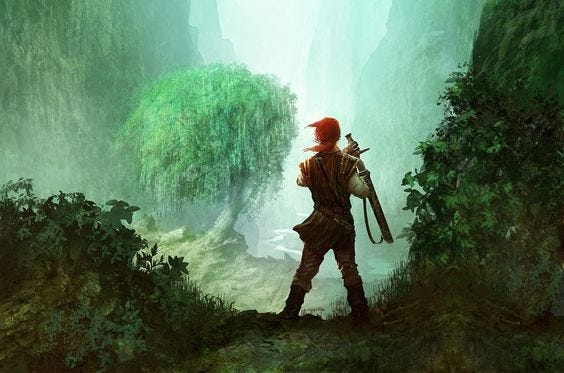
I could talk about many books here, from my journey with Percy Jackson and the Olympians to The Way of Kings. I could talk about Childhood’s End or Foundation, but today I chose to talk about a single series, one that marked me so deeply it made me start writing again after I had given up. The Kingkiller Chronicle: The Name of the Wind and The Wise Man’s Fear.
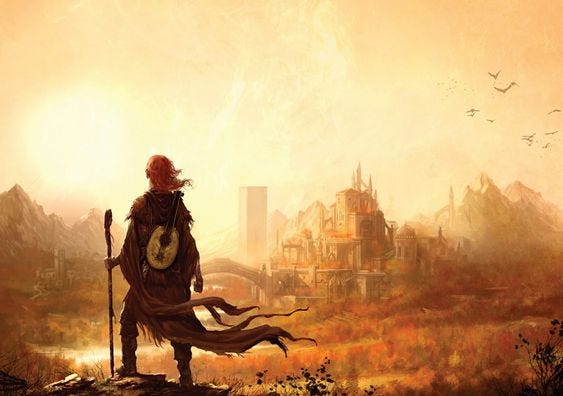
Let us start with another line from this book:
“It is as if everyone tells a story about themselves inside their own head. Always. All the time. That story makes us who we are. We build ourselves out of that story.”
- Patrick Rothfuss
When a friend recommended this book, it took me a while to read it. I had lost faith in books, I was almost surrendering to depression and on the edge of the abyss of someone who needs to create and does not. I had given up on writing, and even with a stone in my shoe I still wore it and walked in it, hurrying to get nowhere.
When I finally decided to read The Name of the Wind, I lay down before sleeping and thought: “Maybe, just maybe, this book will help me have good ideas again.” That night I did not sleep. I do not want to just heap praise on the book, its gripping narrative and everything it teaches between one piece of fantasy and the next, but to say that if it were not for this book, I would not have this newsletter, much less make a living from writing. Books save, and they save a lot. They build personalities, shape thoughts and teach about life, but remember: knowing how to choose what is good is as hard as solving equations without knowing what functions are.
The Name of the Wind is about growing up, about being a child and going through impossible horrors. It is walking alongside Kvothe, the protagonist, and hoping his day goes well even if yours did not, and feeling good when he finds a good place to sleep, a new coin to buy food, or learns something new that will help him on his journey. And what journey is that? Well, Kvothe’s journey is light and heavy in the right measure, dark and frightening at times, but above all inspiring, because Kvothe is no ordinary protagonist. He is more human than many real people I have known up close.
“So yes, he had his flaws, but what does that matter when it comes to matters of the heart? We love what we love. Reason has nothing to do with it. In many ways, foolish love is the truest kind. Anyone can love something because of. It is as easy as putting a coin in your pocket. But to love something in spite of, to know its flaws and love them too, that is rare, pure and perfect.”
- Patrick Rothfuss
Now, when it comes to comics, wow, I do not even know how to start talking about what has been, to this day, my biggest source of income. It is funny to remember: I did not read comics, I did not like the look of them, manga was cooler. Then, in 2011, I met someone who collected comics. He did it where finding comics was almost impossible, and he had so many… He lent me a few, saying “I bet you will like Spider-Man.” He was right.
Superheroes fascinate me for a different reason than games and books. In games it is me playing, I am the protagonist, I kill monsters, make choices, go back in time, accomplish feats. In books it was not me, it was a different protagonist, someone I was getting to know and understand. Comics had a perspective similar to books, but with a twist that always captivated me: heroes might not be heroes.
Having powers is absurd; having powers and using them for good is even more absurd. I have told some friends that if I had powers… oh, God, do not do that… I definitely would not be the hero of this story. Heroes, people who choose to do good just because, beings who prefer to build rather than destroy: that captivates me. More than that, understanding that behind a mask, a stylized costume or exaggerated muscles there is humanity, even when they are not human.
There is one single comic story that moved me to write comics and led me to many others. I could talk about the dilemmas of Marvel’s Age of Ultron, or all the losses of the Civil War between Captain America and Iron Man, but you have seen that in theaters. I could also talk about The Killing Joke, and how right the Joker was in trying to prove that one bad day is all it takes to turn a sane man into a madman, but you have seen that too, even if in a different form. Better yet, I could talk about how any of us would do worse than what the Flash did in Flashpoint: we would not only save our mother when going back in time, we would do more, you know…
But today I will talk about Identity Crisis. Today I will talk about how fragile heroes can be if you know where to look. That is what this comic did.
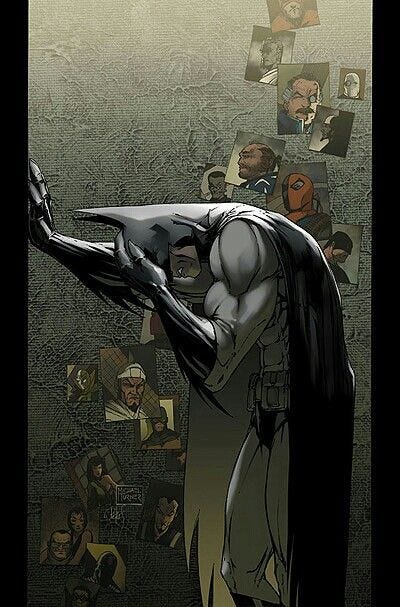
How far can a hero go to protect their identity, to protect their loved ones? How far is it moral and fair to do something for the “greater good”? The questions raised in this comic lead to more questions and thoughts that change how you see these characters. The flaws, the mistakes, the imperfections that do not fit DC’s heroic figures are all laid bare here. And that is what I like: the reality behind the fantasy, the fear superpowered beings feel of themselves when they realize, with difficulty, that the greatest danger to heroes is themselves.
Comics are about making the reader feel movement even when there are only 3 panels and a speech balloon. And if you are also thinking about writing comics, as I once did, and then did, here is a little gift.
This is an ebook written by Gian Danton, a Brazilian comic writer who taught me a lot when I was starting out and gave me the foundations to keep going when everywhere else I only found obstacles. This version is distributed for free by Virtual Books, with the author’s permission, as stated on the first pages (it is in Portuguese). I hope you, young writer, are inspired and make good use of the material. If you need anything, reach out, I am here to help!
That is it for today.
See you, explorers!
Originally published in Prosa & Pixel, on Substack. See it on Substack · Subscribe to Prosa & Pixel · All issues