RPGs (role-playing games) were one of my first experiences with interactive narrative. One person narrated facts and events, I was a character in that setting, and when the blessed question came, “what do you do?”, I lost myself in someone who was and was not me at the same time.
Escaping reality with friends through roles, rules, books and character sheets is priceless for anyone thinking of working with creative writing in some way.
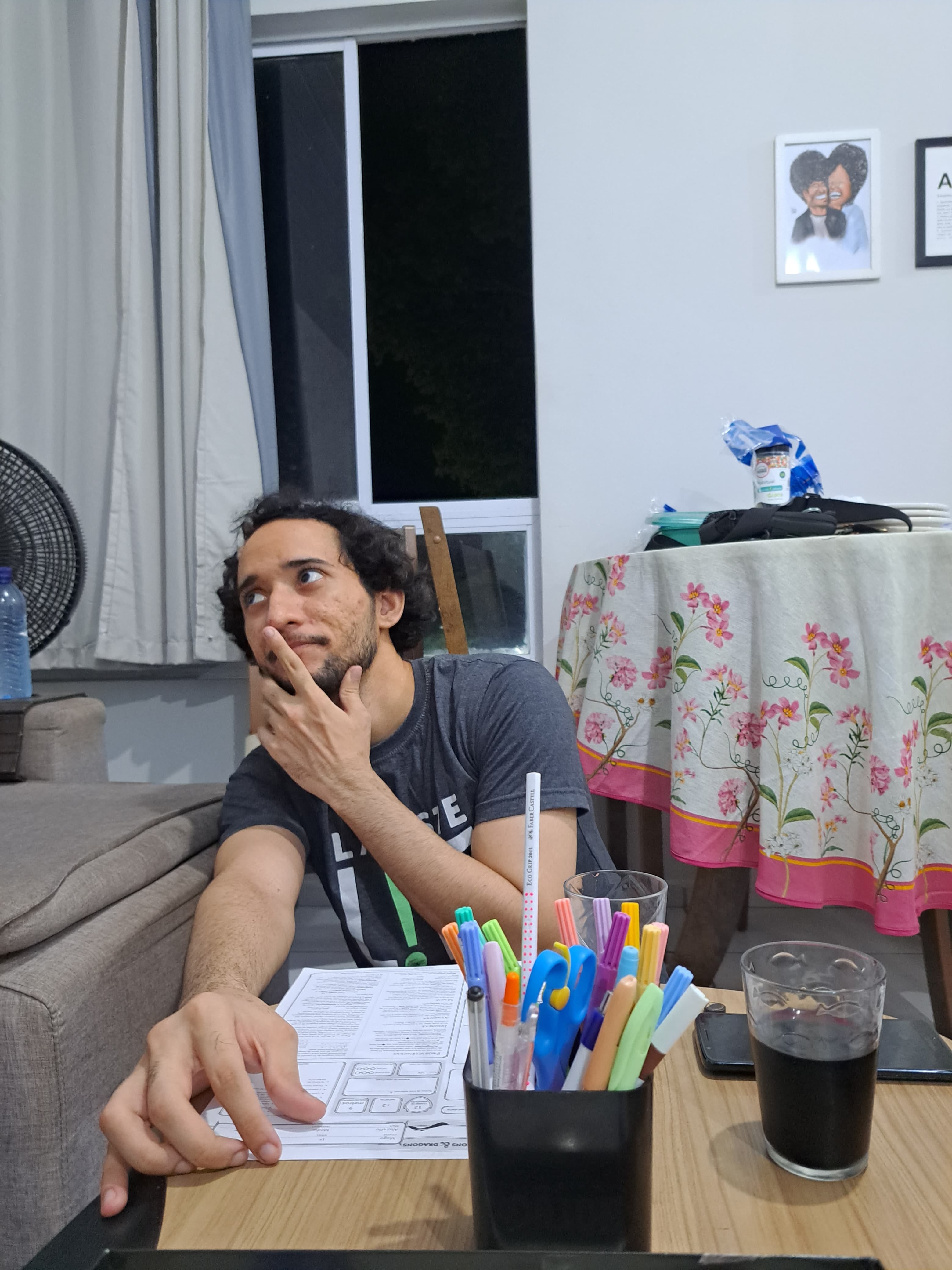
I discovered tabletop RPGs as a kid. Back then, by luck or chance, I got involved with older friends who had been playing RPGs for a few years, and they did not want to include me; they had their reasons. I asked to watch them play, and it was cool. When I finally got to take part, about two years later, there were arguments about it. At the time some controversies involving tabletop RPGs had already happened in Brazil, and they did not want to risk having someone too young playing with them and then doing something stupid.
I am deeply grateful for the care my older friends took with me when I got involved with them. When you go through childhood and approach adolescence, you meet people you will carry for life, people who will mark your story one way or another: friends, enemies, rivals, crushes and grudges. I found my pieces on that board, and the game was fun. I grew up, and I carry with me every experience they gave me, including the bad ones.
From “Vampire: The Masquerade” to “3D&T”
At the very beginning I fell in love with the tabletop RPG “Vampire: The Masquerade”. Back then it was the third edition, illegally printed at a stationery shop, and it was all I had to play RPGs with a few friends. I was moving to another city and hoped to find those friends on the journey ahead. The book had been a gift from a friend in my hometown; he taught me what an RPG was, what it meant to have fun with words, friendships, moments, dice and hours of play.
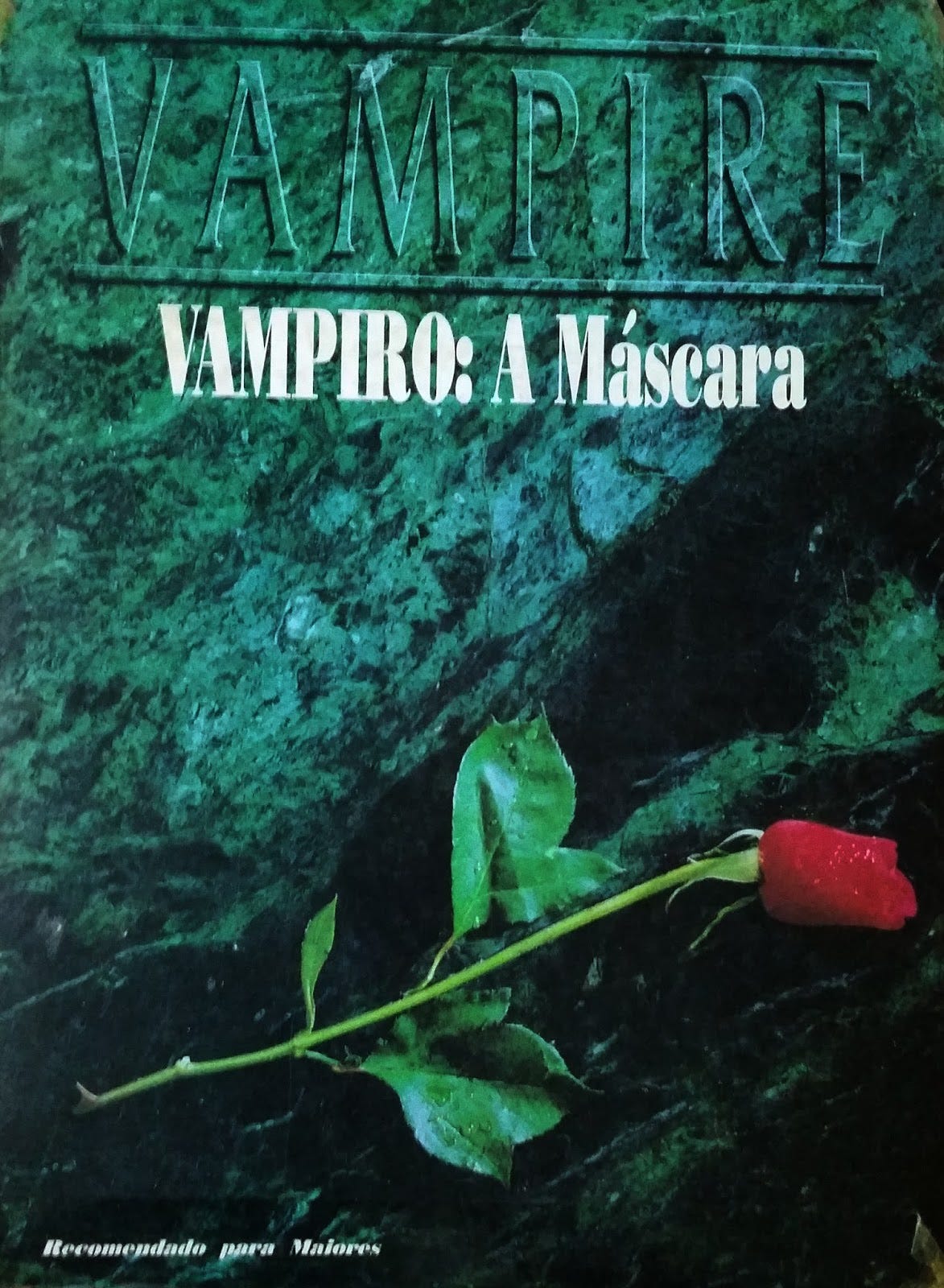
When I made new friends in the new city, I had an interesting surprise: they did not know what a tabletop RPG was.
It is funny: when you know little of the world, you automatically assume everyone knows what you know and likes what you like. Reality is different, but at least they were willing to learn. But how was I going to introduce tabletop RPGs to friends who had never played if I was a beginner myself and had nothing more than a rulebook?
It was time to study. RPGs are study, first of all: understanding how the game works, the rules, classes, races, systems, dice, possibilities and impossibilities. Creativity comes after that. That is how a Game Master is born.
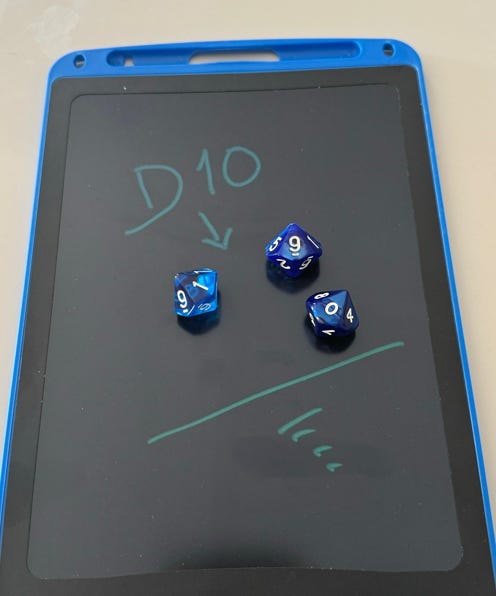
That journey was interesting. Studying the RPG I had in hand, I noticed I would need lots of ten-sided dice, the famous D10s, and I had no idea where to get them, so I took another route: learning a new system that only needed D6s, six-sided dice, which were easier to find. That is when I discovered 3D&T.
Before talking about 3D&T, I will talk a bit about “Vampire: The Masquerade”. Besides being the first RPG I came across, it was also one of the most immersive I have ever played. I do not know if it was the tables I joined or the GMs I had, but it really was easy to put myself in the role of a creature of the night, and it even sounds funny to think about it.
There, playing with friends, I was Indrael, a vampire of Clan Gangrel, one of the clans with an affinity for nature and especially animals, able to turn into some of them or even summon them to fight alongside. I roamed the streets of a dark version of my hometown, where other clans warred with each other for control of territory in the absence of a leader, a prince, as they called it, all without breaking the “Masquerade”. The “Masquerade”, as a game element, was extremely important. It was basically a rule: Do not reveal yourself. Everyone who had broken it had been hunted down and killed, either by human hunters or by the vampires themselves.
That whole World of Darkness setting was really interesting to explore, and it was impossible not to have action, suspense and drama, because that is just how vampires are. We always had to drink blood, someone was always trying to kill us, and friends could betray you at any moment. It was all one big survival game. And I believe that is where my first lessons in writing suspense, terror, horror and gore came from. Vampires.
3D&T, on the other hand, was far more versatile. Now let us talk about it, since in my opinion it was the RPG system that gave me the most laughs, just from using it, not counting everything that happened at the tables I ran with it.
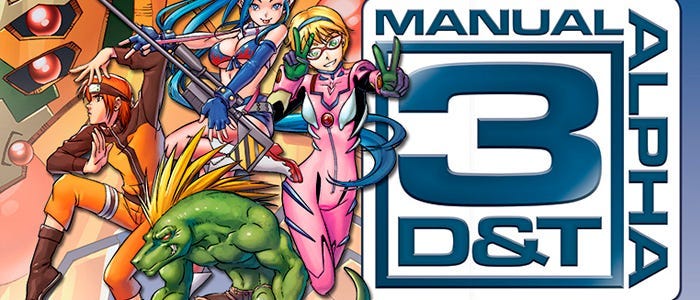
The third edition of Defensores de Tóquio (Tokyo Defenders), or 3D&T, was essentially a versatile RPG system: you could embrace the rules and adapt them to any kind of narrative, from a world of ninjas to a world of giant robots fighting for humanity, and that was good, it leaves room for creativity. However, the fact is that too much freedom creates confusion, in writing, in creation, and in RPGs too. The freedom this system gave me put me in situations I could never have imagined without playing with my friends.
Imagine you are an Elf. You aim your bow at an Orc’s head, but you did not notice that the Orc, standing with his back to you, was rubbing a magic lamp. The genie comes out and demands a wish be made. Ah, the wish… the problems a wish could cause in 3D&T stories were enormous, and so many times I had to masterfully control situations so the world would not lose its consistency.
As a GM I was never very organized. I learned the craft by doing, so setting up campaigns and missions was not that simple. Sometimes I just wanted to sit down, chat with my friends and start the game. And how did it start? Oh, any sentence can start an RPG session. I was always a fan of the classic:
“You are a group of adventurers who take jobs for money while traveling the world. Right now you are in a tavern in the kingdom of Korvam, a kingdom full of thieves and packed with all sorts of peoples. What do you want to do?”.
That kind of situation opens doors to many others. We are in a kingdom with several races and lots of thieves, we are in a tavern, we work for money. Right away I had room to cause some incident with thieves or rival races, a tavern brawl, someone asking for help, a murder in broad daylight, jobs offered by the tavern, or simply wait for the players to act. They always acted in the most unexpected way possible and made the adventure happen. Running games like that, like a gardener who plans nothing and just lets the plants grow (in this case, lets the adventure unfold), put me in funny situations that demanded a unique skill at improvising and narrating. I loved that.
You, young writers, may doubt it, but try letting someone else decide the actions of characters you do not control, and see what happens to the story. It is magical.
Working with RPGs
I have never made money from RPGs. That is a fact: I never charged to run games for friends or strangers, never sold anything RPG-related and never worked on one for pay. And I do not worry about it. RPGs have always been a hobby, and I like that they have that place in my life, since what I love most, writing, became work, and I fear the day it becomes boring. For now, I am safe.
When work and passion mix, they become a complicated relationship.
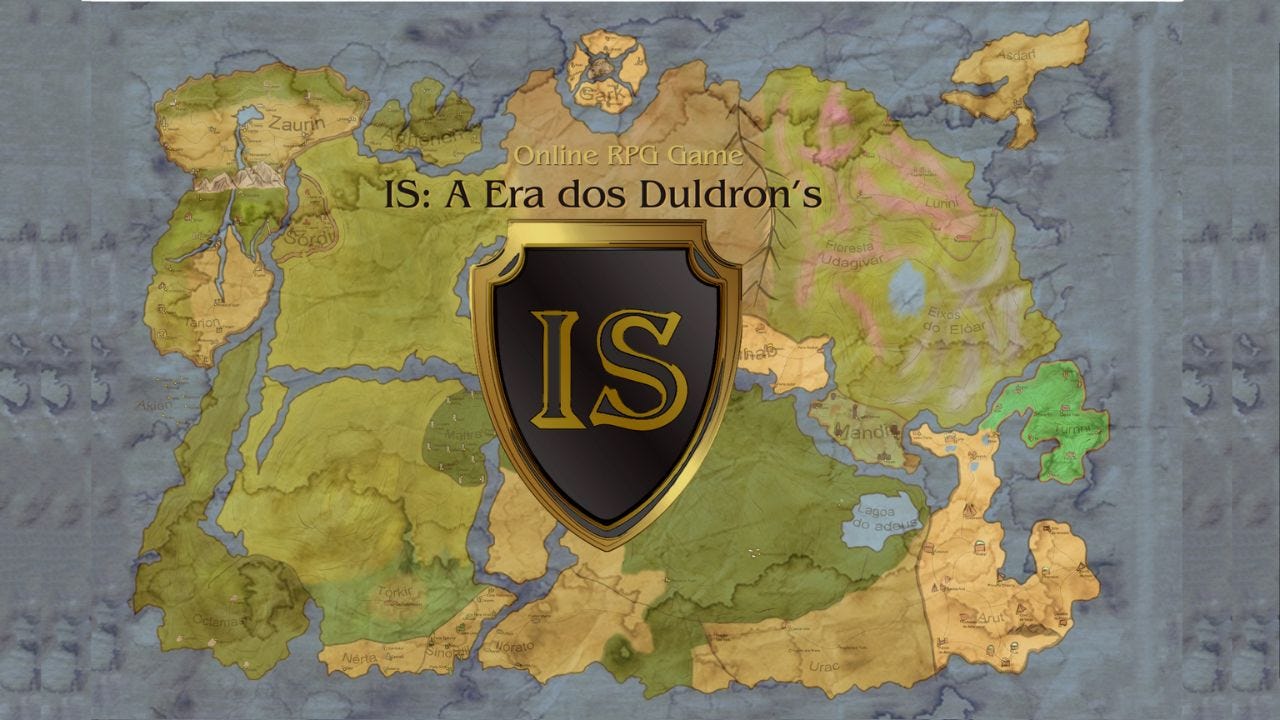
However, in 2023 I worked for a few months as a volunteer Game Design intern at the publisher Impérios Sagrados. The idea was to build a tabletop RPG system for content they had been developing for years. It was probably one of the most challenging moments of my career in games, so much so that my personal problems managed to beat my passion for the work and I had to leave in the middle of the project. But it went on, and it is still alive today.
Check out the online campaign they are running. The system I helped build is still under construction and is not being used yet, but the mastery behind this game’s narrative only proves how intertwined running games and writing are in a good writer’s life. If you write and do not run games yet, why not at least try playing? Look for an online table, or contact IS and try to join theirs. Sometimes the start of a journey is the first step you take outside your bubble, and the journey always changes you, for better or worse.
It is also worth mentioning that, although I never made money from RPGs, all my experiences with them helped me take on other roles, roles that paid me quite well, and I know that for many people it is all about money.
RPGs also opened interesting doors at another publisher, New Order, where I became an Official Game Master for the publisher and got materials in advance for content creation and pre-release testing. But that is a subject for another issue, where I can bring you my opinions on materials I received early. Would you like that? I have seen a bit of everything, from hard science fiction to urban fantasy and medieval fantasy.
On writing and running games
Throughout this issue I pointed out several times how running RPGs helped me grow as a writer and creator, and that is a fact I cannot deny. But how did that growth happen? How did I practice this role so it became part of my development? Let us get into the details, at least partly.
My head works in a somewhat strange way, even to me, so forgive me if something here does not make much sense to you.
When I started running tabletop RPGs, I felt a huge need to record the games because, as I said, most of them came from improvisation; there was no campaign book or predefined written campaign. That put me in a tough spot: since I only played once a week, from one week to the next I could (and did) lose information, and sometimes not even the players could help me remember the previous session or sessions.
That is how I decided to keep a written record of every RPG session. Right after a session I would go to my notebook and write down, point by point, the most important events. Then, on a very old laptop, I wrote in detail what had happened, because looking at the points one by one I remembered the smaller details. That is how I started finding patterns, or rather, the lack of them, because it is in the absence of patterns in dialogue and action that the naturalness of creation lives. Naturalness is what makes a narrative easy to consume. There is no effort to make situations be what they are; they simply are, they happen as they should, because the dice decided, people thought about it and wanted it that way, and everything kept getting cooler.
That exercise, laborious as it was, left me with piles of documents. I lost most of them, but I still have the notebooks, thankfully. I believe there is no better way to exercise creativity than leading an RPG table: listening to your players and improvising on their creations, defining a world, a setting, its details, its plot, and improvising as things happen, challenging yourself as a creator, and whenever something grand happens, congratulating yourselves, because you made it happen together.
RPGs are not about telling stories with magic and power, not about action on every dice roll; they are simply about having fun. That is the golden rule. Have fun. Because remember, a tabletop RPG is also a game, and every story that comes out of it, created by you and your friends, is fun: not just the dialogue, but every dice roll, every bit of madness, every good prank and, above all, every good memory that will fill conversations years later.
That is what RPGs are. They moved my life for years and gave me stories, friends, memories and, of course, expenses.
That is all for today.
See you, explorers!

Originally published in Prosa & Pixel, on Substack. See it on Substack · Subscribe to Prosa & Pixel · All issues