This issue took longer to come out than I expected, but for good reasons, as you will see.
When I started writing games, I had already gone through a few points in my career that gave me enough experience to understand how to balance my study time with my production time. As soon as I started taking a more active part in communities, both local and national groups, I met many people who struggled with this, an almost insurmountable difficulty balancing studying the field with actually making things.
I met people who only studied, day and night. They debated for hours in groups, seemed to know everything (in theory) and were always ready to help newcomers, but, curiously, had no tangible results. They did not produce, or when they did, they did not finish, stopping halfway to, guess what… study!
I also met people who produced nonstop, always posting results of projects in progress and the start of new ones: always a new game, a new mechanic, a new clone. The funny thing here is that there was never a finish. Sometimes some knowledge was missing, or a new idea came up. And everyone knows practice is always more fun, so the mistake was never stopping to study, just producing like crazy.
Watching people like that helps you build a better sense of direction, in the sense that mistakes happen to everyone, and if you can see clearly, talk and understand, you learn from other people’s mistakes. I am not saying I learned from other people’s mistakes, just that it is possible; I simply was not able to. I have also had my own obsessions with studying and with producing, at different times, and they did not take me down very interesting paths.
So what is the point here?
The point is finding a solution. Where does the balance between studying and making come from?
Study groups
When I found Piauíndie (the community of independent game developers from Piauí), I found a place to share ideas, report achievements, celebrate wins, mine and other people’s, and above all a place to make good friends. That helped me a lot throughout my career, and it still does, but it was when we created a closed group for study, practice and challenges that I felt everything was starting to make sense.
The first study group I joined was called NOSY (Not Officially a Studio Yet). The idea was: study, make, show it to the community and then go back to step 1. Study, make, show, study, make, show, and on we went. We did not want to be a studio, because some of us knew all the bureaucracy and headaches that could bring. The goal was much simpler: build a portfolio and get a job.
(We even won a competition called Game Jam+ in the local stage, see the article)
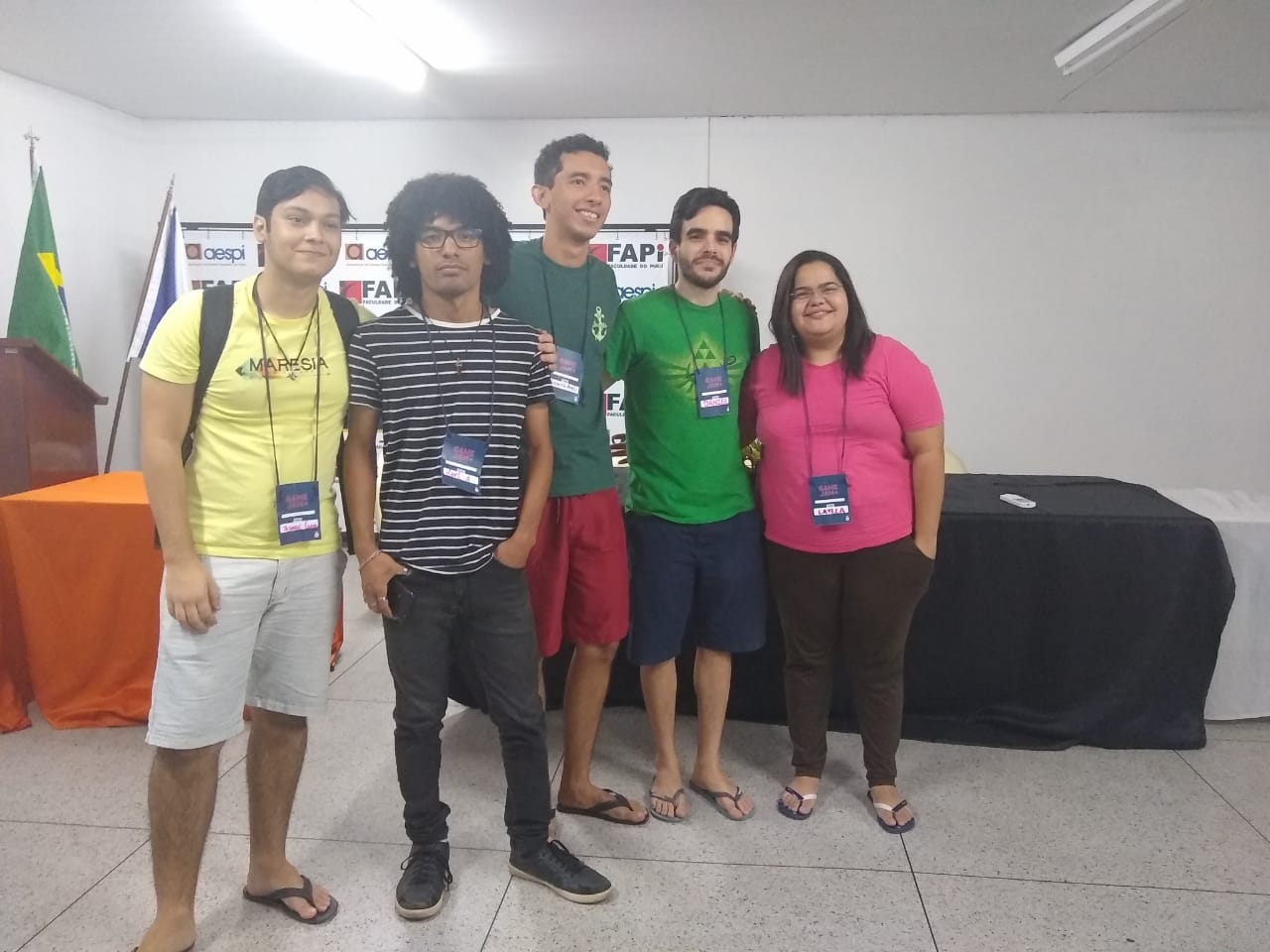
This is where you find the balance between studying and making.
Study groups, when well structured, organized and with clear goals, can guide the start of your career along a clearer path. It worked for me and I still see it working for many colleagues. Studying without making and making without studying are single-edged knives, and in this field you need at least a double-edged longsword with magic crystals set in the sheath to get through the challenges. If you are in the field, you know.
(On my itch.io page you can find Varginha Mission, one of the games I made with NOSY. If you play it, tell me what you think in the comments.)
But do you know what is funny about NOSY’s story? When the goal was reached, the group practically dissolved. Maybe that was our mistake, or maybe not. I think deep down we knew that would be the end, once we were working in games or related fields, earning our money, living our lives. As that not-so-old and not-so-wise sage from Marvel says, “Part of the journey is the end.”
Arka is different, because Arka never really stopped; there were only pauses. And to talk about Arka I need to bring another voice into this conversation, two more hands to this text. So I summon Ruhan Bello, the Arkano, leader of Arka and one of the mentors on my journey. He will introduce himself, but to open the curtains: Ruhan has a degree in Computer Science from UFPI, is a senior programmer, one of the pioneers of game development in Piauí and one of the founders of Piauíndie.
Arka and the Arkanos
Hi! My name is Ruhan Bello and I am a game developer. Professionally I work as a programmer, and as a hobby I am a game designer and producer. I am from Piauí but now live in Hamburg, Germany, where the company I work for (Exit Games) is based.
At David’s invitation, I am here to share the concept behind Arka.
Arka’s origin and name come from an old dream. During university, I promised myself and a friend that one day I would found a studio that would be like one of the great flying ships of Final Fantasy IX, and that it would be a home for friends with the same dream: making a living from games. This “ark” would guide those chasing that dream through “arcane” magic.
Arka’s purpose comes from a wish many of us share: making games with friends. Something personal, collective, made with care and dedication, whether small, medium or large.
The challenge, however, is big: starting and finishing games is hard. Even small experiments demand a focus that lets you cross the finish line. A huge number of developers get “lost” along the way and never finish a game. Also, working among friends requires firmness to keep a balance between doing what the game needs and doing what the developers want, with the game still taking priority.
The limitation is the team’s free time and energy, because this is a study group, not our job. We run projects because we enjoy it and need the practice; after all, a game developer’s best portfolio is usually a showcase of finished projects.
Even if they are small, showing the ability and the passion to finish many projects is extremely important.
So we use the limits on time and energy to make a smart choice: focus on small-scope games that still have a good enough hook to spark interest and entertain our players. Game jams, by the way, fit that requirement well!
With enough balance, we manage to keep our egos in check and make small games that show off each member’s skills, slowly (and steadily) sailing the ocean of the “big dream”.
Project FIRE!
And of course, if we talked about NOSY and there was a game, we are talking about Arka, so we need a game!
Go ahead and turn on the sound for this wonderful track Guilherme Bortot (Arka member) made for Project FIRE.
Project FIRE was one of the big projects I worked on at Arka. Now that you know what Arka is like, its challenges and goals, let me show you tangible results. A study group needs that.
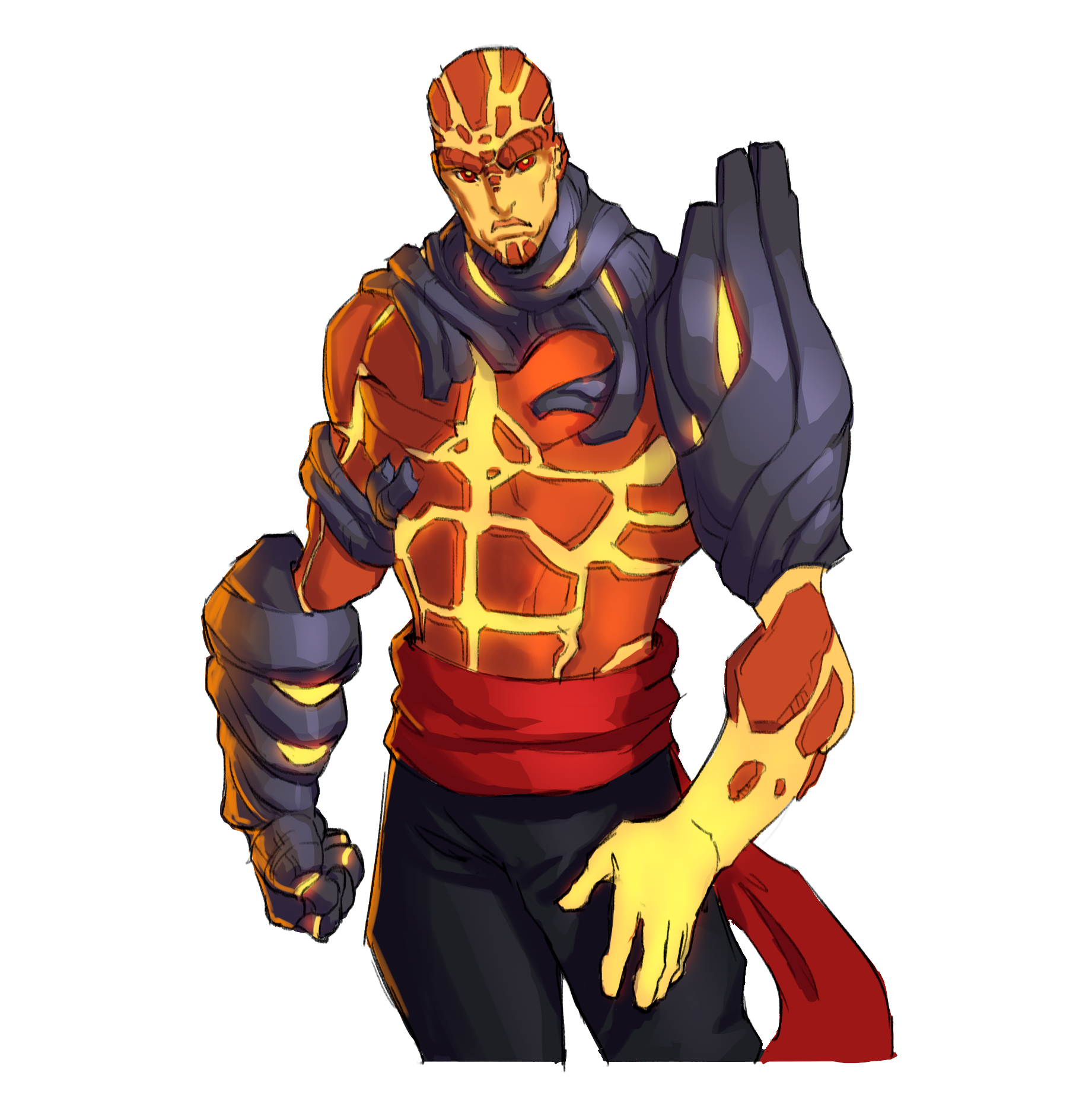
Project FIRE was born with a slightly bolder proposal than a game jam (making a game in a short time with a set theme). Here we would have MUCH more time, and we would do it without rushing, in our free time. A closed scope, defined mechanics, a linear narrative and interesting gameplay. That was the focus.
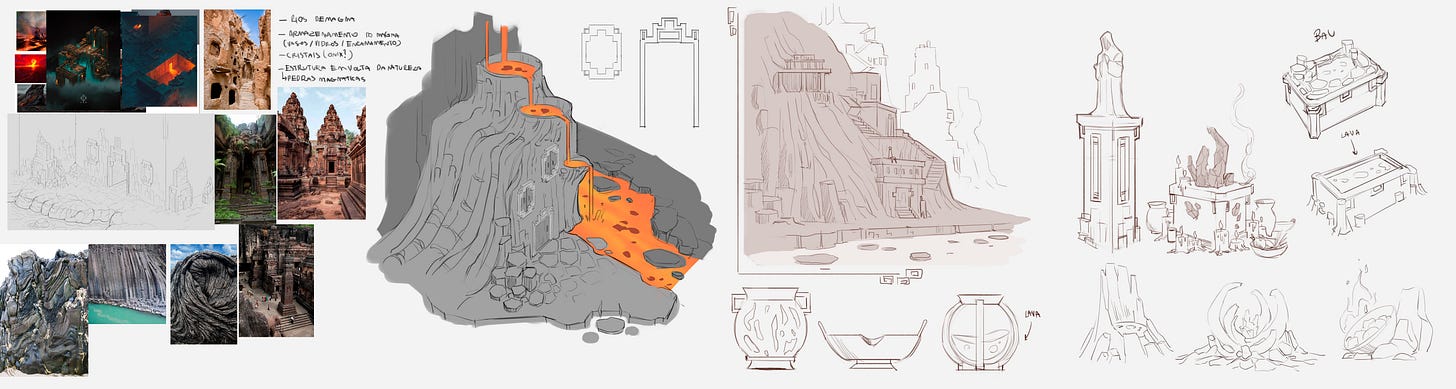
FIRE has been, to this day, the longest study project I have worked on. It was also the first one where I worked 100% as a narrative designer, and I put to the test everything I had learned over almost a year of study focused only on writing for games.
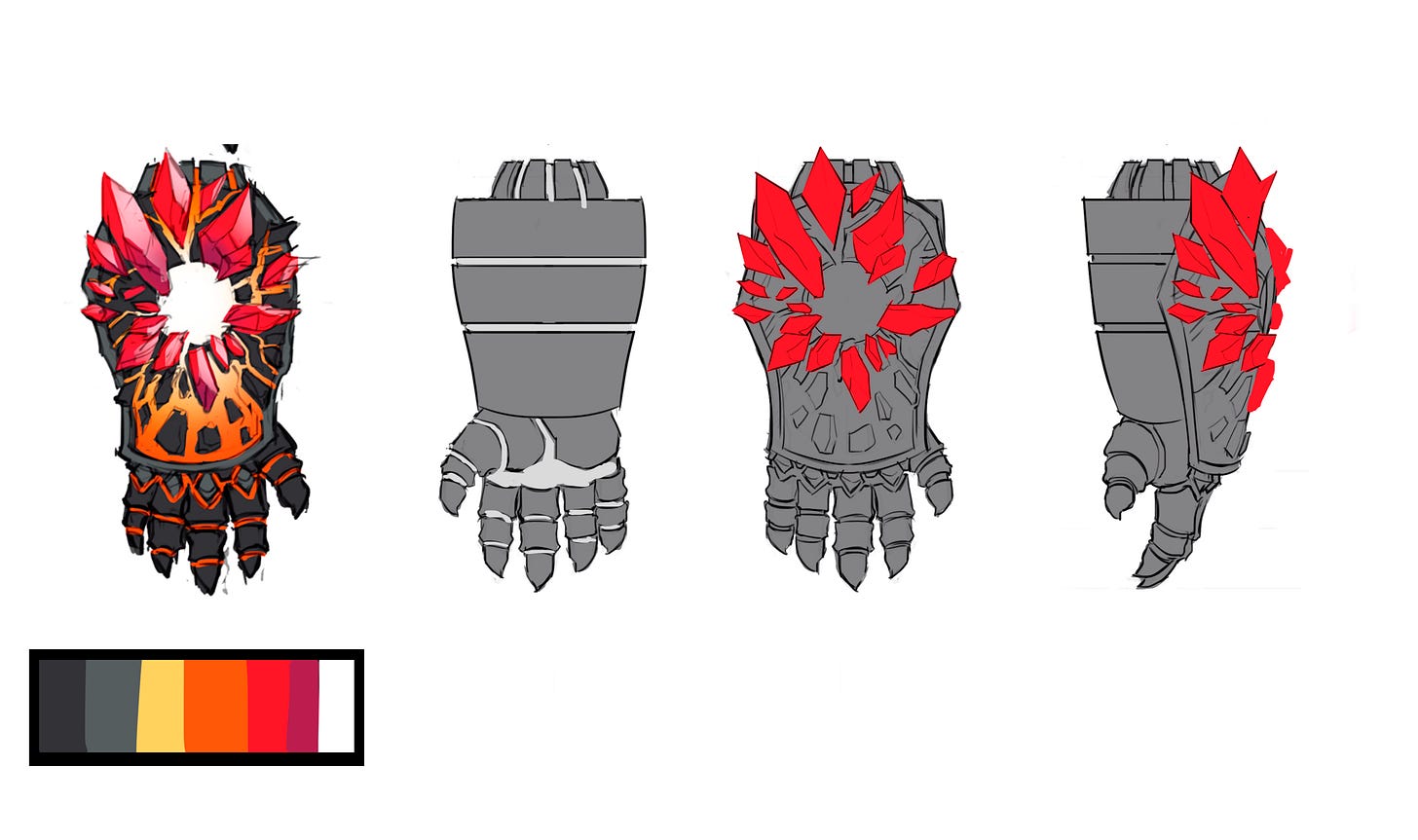
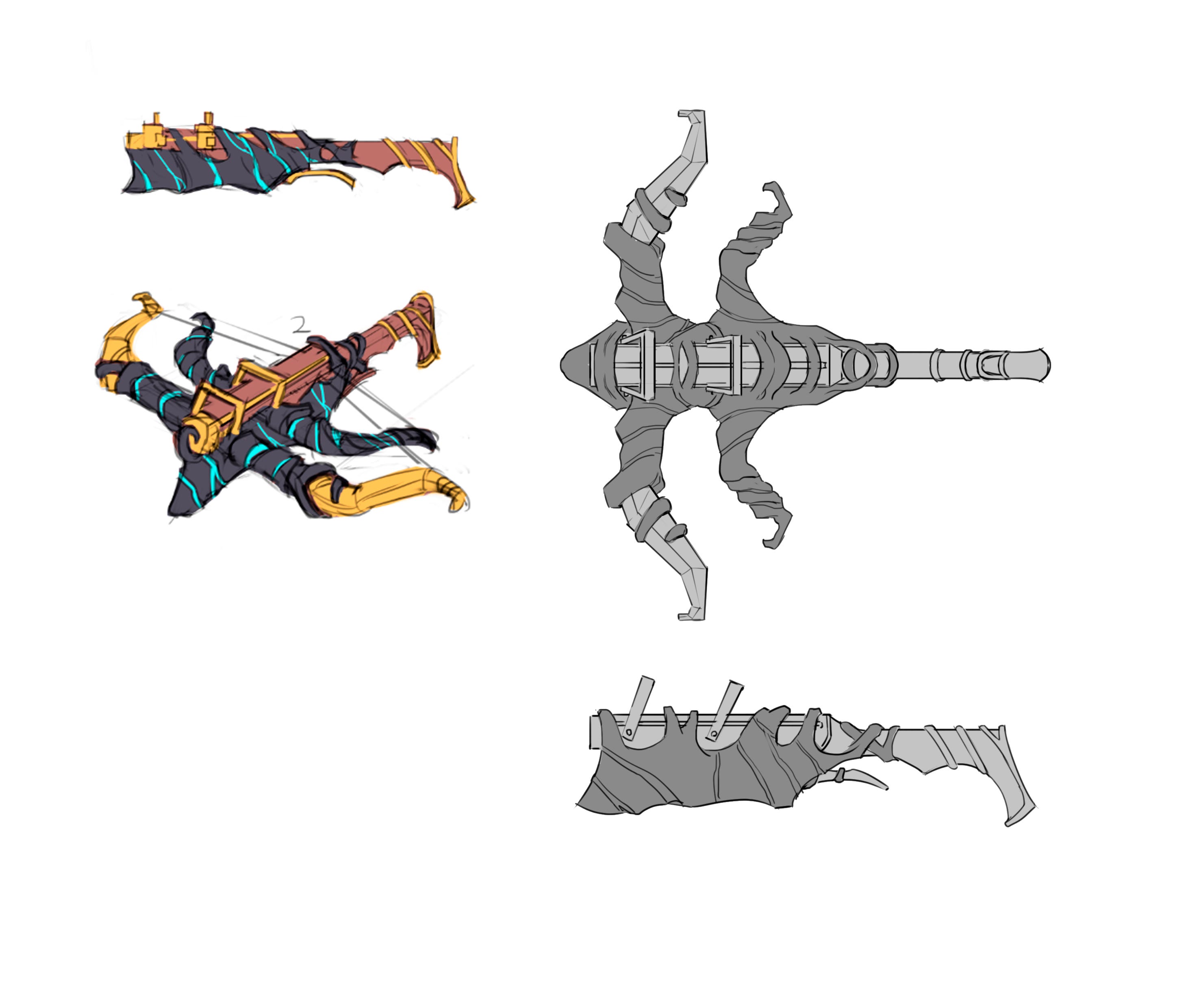
But more than that, this project was also the first “big” project for people who were starting their careers in the games industry, like José Rafael, who made some of the art I will show here (some of it seen for the first time by people outside Arka).
This was also the project that got people on the team jobs they still hold today, like Pedro Ivens, 3D animator at Dumativa (the studio behind “Legend of the Hero” and “Enigma of Fear”), who got in by presenting Project FIRE as his main animation portfolio. In fact, above is a simple animation of one of the enemies in the game, made by Pedro.
It is actually fun to remember those months of production, with no pressure, with meetings that turned into Gartic Phone sessions and then filled the group chat with nonsense art from our “best” artists hahaha.
Project FIRE was completed successfully, with a smaller final scope than we first imagined, which is part of the production process, and a short but complete experience where you face different enemies, explore, find narrative, fight more enemies, take in beautiful scenery and face a challenging boss.
I would say there is still a lot of material from this project to show, especially written material, take a look. But for now I will stop here. Who knows, if you like it and ask for more (then maybe I can invest some time, call some of the people who were on the project and release an art book :p).
And to wrap up, here is the game, so you can see the concrete result of a well-structured study group with guidance and clear goals. A place where we find the balance between studying and making.
But above all, a place where we find friends!
Tell me in the comments what you thought of this issue, and whether you want more content like this (maybe even a production diary for one of the projects I made with Arka or NOSY).
For more games, follow my itch.io and, you know, if you need anything, just reach out!
See you, explorers!
Originally published in Prosa & Pixel, on Substack. See it on Substack · Subscribe to Prosa & Pixel · All issues